


Sleep Hygiene: Actionable Tips for Adults Struggling with Insomnia or Restless Nights  It’s 2:17 a.m. You’ve flipped your pillow three times, checked the clock more times than you can count, and started doing math on how many hours you’ll get if you fall asleep right now. By morning, you’re groggy, short on patience, and reaching for a second cup of coffee before 9 a.m.  If this sounds familiar, you’re far from alone. Millions of adults deal with insomnia or restless nights. The good news is that small, steady changes to your daily habits, often called sleep hygiene, can make a real difference in how quickly you fall asleep and how rested you feel when you wake up.  Here are practical, research-backed tips you can start using tonight.  What Is Sleep Hygiene?  Sleep hygiene is the set of habits and surroundings that support healthy, consistent sleep. It covers your daily routine, your bedroom, what you eat and drink, and how you handle stress. Most adults need at least seven hours of sleep each night, and good sleep hygiene helps make those hours count.  1. Stick to a Consistent Sleep Schedule  Your body runs on an internal clock called your circadian rhythm. When you go to bed and wake up at different times every day, that clock gets thrown off.  Wake up at the same time every day, even on weekends. This is the single most powerful anchor for your sleep cycle.  Go to bed when you feel sleepy, not just because the clock says so.  Keep naps short. If you need one, aim for 20 to 30 minutes before mid-afternoon.  Consistency may feel hard at first, but within a week or two, many people notice they fall asleep more easily.  2. Limit Screen Time Before Bed  Phones, tablets, and TVs give off blue light that can signal your brain to stay alert. Scrolling also keeps your mind busy at the exact moment you want it to slow down.  Try setting a “screens off” time 30 to 60 minutes before bed. If that feels tough, start with 15 minutes and build from there. Use night mode on your devices, and consider charging your phone outside the bedroom so it’s not the last thing you see.  3. Create a Sleep-Friendly Bedroom  Your bedroom should feel like a calm retreat, not a second office.  Keep it cool. Most people sleep best when the room is between 60 and 67°F.  Keep it dark. Blackout curtains or a sleep mask can block outside light.  Keep it quiet. A fan, white noise machine, or earplugs can mask sudden sounds.  Save your bed for sleep and intimacy. Working, eating, or watching TV in bed teaches your brain to link it with being awake.  A comfortable mattress and supportive pillows matter too, so if yours are worn out, they may be part of the problem.  4. Watch Your Caffeine and Alcohol Habits  What you drink during the day can follow you into the night.  Caffeine can stay in your system for hours. Try to cut off coffee, tea, soda, and energy drinks by early afternoon, at least six to eight hours before bed.  Alcohol might make you feel drowsy at first, but it disrupts sleep later in the night. It often leads to lighter, more broken sleep and early waking. Limiting alcohol, especially in the evening, can help you sleep more deeply.  Heavy meals close to bedtime can also cause discomfort or heartburn. A light snack is fine if you’re hungry, but aim to finish larger meals two to three hours before sleep.  5. Build a Relaxing Wind-Down Routine  Your body needs a signal that the day is ending. A simple, repeatable routine can help you shift from busy to calm.  Ideas to try:  Take a warm shower or bath  Read a paper book under soft light  Do gentle stretches  Listen to calming music or a sleep story  Dim the lights around your home  Pick two or three that feel good and do them in the same order each night. Over time, your brain will start to recognize the routine as a cue for sleep.  6. Manage Stress and a Racing Mind  For many adults, the hardest part isn’t getting into bed. It’s turning off the mental to-do list once you’re there.  Write it down. Spend five minutes before bed jotting down worries or tomorrow’s tasks so they’re out of your head.  Try deep breathing. Slowly breathe in for four counts, hold for four, and breathe out for six.  Practice progressive muscle relaxation. Tense and release each muscle group, starting at your toes and moving up.  Get out of bed if you can’t sleep. If you’ve been awake for about 20 minutes, move to another room and do something quiet until you feel sleepy. This keeps your bed linked with rest, not frustration.  Regular physical activity and time in natural daylight during the day can also lower stress and improve sleep quality. Just try to finish intense workouts a few hours before bed.  When to Talk to Your Primary Care Provider  Sleep hygiene works well for many people, but it isn’t a cure-all. If you’ve tried these tips and still struggle to fall or stay asleep at least three nights a week, or if poor sleep is affecting your mood, focus, or health, it’s time to get support.  Ongoing sleep problems can be linked to conditions like sleep apnea, anxiety, depression, thyroid issues, chronic pain, or medication side effects. Your primary care provider can help find the cause and talk through options, including cognitive behavioral therapy for insomnia (CBT-I), a proven, drug-free approach.  You deserve to wake up feeling rested. If restless nights are wearing you down, schedule a visit with your primary care provider. Our team is here to listen, help you understand what’s going on, and build a plan that brings better sleep within reach.


Sleep Hygiene: Actionable Tips for Adults Struggling with Insomnia or Restless Nights It’s 2:17 a.m. You’ve flipped your pillow three times, checked the clock more times than you can count, and started doing math on how many hours you’ll get if you fall asleep right now. By morning, you’re groggy, short on patience, and reaching for a second cup of coffee before 9 a.m. If this sounds familiar, you’re far from alone. Millions of adults deal with insomnia or restless nights. The good news is that small, steady changes to your daily habits, often called sleep hygiene, can make a real difference in how quickly you fall asleep and how rested you feel when you wake up. Here are practical, research-backed tips you can start using tonight. What Is Sleep Hygiene? Sleep hygiene is the set of habits and surroundings that support healthy, consistent sleep. It covers your daily routine, your bedroom, what you eat and drink, and how you handle stress. Most adults need at least seven hours of sleep each night, and good sleep hygiene helps make those hours count. 1. Stick to a Consistent Sleep Schedule Your body runs on an internal clock called your circadian rhythm. When you go to bed and wake up at different times every day, that clock gets thrown off. Wake up at the same time every day, even on weekends. This is the single most powerful anchor for your sleep cycle. Go to bed when you feel sleepy, not just because the clock says so. Keep naps short. If you need one, aim for 20 to 30 minutes before mid-afternoon. Consistency may feel hard at first, but within a week or two, many people notice they fall asleep more easily. 2. Limit Screen Time Before Bed Phones, tablets, and TVs give off blue light that can signal your brain to stay alert. Scrolling also keeps your mind busy at the exact moment you want it to slow down. Try setting a “screens off” time 30 to 60 minutes before bed. If that feels tough, start with 15 minutes and build from there. Use night mode on your devices, and consider charging your phone outside the bedroom so it’s not the last thing you see. 3. Create a Sleep-Friendly Bedroom Your bedroom should feel like a calm retreat, not a second office. Keep it cool. Most people sleep best when the room is between 60 and 67°F. Keep it dark. Blackout curtains or a sleep mask can block outside light. Keep it quiet. A fan, white noise machine, or earplugs can mask sudden sounds. Save your bed for sleep and intimacy. Working, eating, or watching TV in bed teaches your brain to link it with being awake. A comfortable mattress and supportive pillows matter too, so if yours are worn out, they may be part of the problem. 4. Watch Your Caffeine and Alcohol Habits What you drink during the day can follow you into the night. Caffeine can stay in your system for hours. Try to cut off coffee, tea, soda, and energy drinks by early afternoon, at least six to eight hours before bed. Alcohol might make you feel drowsy at first, but it disrupts sleep later in the night. It often leads to lighter, more broken sleep and early waking. Limiting alcohol, especially in the evening, can help you sleep more deeply. Heavy meals close to bedtime can also cause discomfort or heartburn. A light snack is fine if you’re hungry, but aim to finish larger meals two to three hours before sleep. 5. Build a Relaxing Wind-Down Routine Your body needs a signal that the day is ending. A simple, repeatable routine can help you shift from busy to calm. Ideas to try: Take a warm shower or bath Read a paper book under soft light Do gentle stretches Listen to calming music or a sleep story Dim the lights around your home Pick two or three that feel good and do them in the same order each night. Over time, your brain will start to recognize the routine as a cue for sleep. 6. Manage Stress and a Racing Mind For many adults, the hardest part isn’t getting into bed. It’s turning off the mental to-do list once you’re there. Write it down. Spend five minutes before bed jotting down worries or tomorrow’s tasks so they’re out of your head. Try deep breathing. Slowly breathe in for four counts, hold for four, and breathe out for six. Practice progressive muscle relaxation. Tense and release each muscle group, starting at your toes and moving up. Get out of bed if you can’t sleep. If you’ve been awake for about 20 minutes, move to another room and do something quiet until you feel sleepy. This keeps your bed linked with rest, not frustration. Regular physical activity and time in natural daylight during the day can also lower stress and improve sleep quality. Just try to finish intense workouts a few hours before bed. When to Talk to Your Primary Care Provider Sleep hygiene works well for many people, but it isn’t a cure-all. If you’ve tried these tips and still struggle to fall or stay asleep at least three nights a week, or if poor sleep is affecting your mood, focus, or health, it’s time to get support. Ongoing sleep problems can be linked to conditions like sleep apnea, anxiety, depression, thyroid issues, chronic pain, or medication side effects. Your primary care provider can help find the cause and talk through options, including cognitive behavioral therapy for insomnia (CBT-I), a proven, drug-free approach. You deserve to wake up feeling rested. If restless nights are wearing you down, schedule a visit with your primary care provider. Our team is here to listen, help you understand what’s going on, and build a plan that brings better sleep within reach.

  • Home
  • -
  • Uncategorized
  • -
  • Sleep Hygiene: Actionable Tips for Adults Struggling with Insomnia or Restless Nights It’s 2:17 a.m. You’ve flipped your pillow three times, checked the clock more times than you can count, and started doing math on how many hours you’ll get if you fall asleep right now. By morning, you’re groggy, short on patience, and reaching for a second cup of coffee before 9 a.m. If this sounds familiar, you’re far from alone. Millions of adults deal with insomnia or restless nights. The good news is that small, steady changes to your daily habits, often called sleep hygiene, can make a real difference in how quickly you fall asleep and how rested you feel when you wake up. Here are practical, research-backed tips you can start using tonight. What Is Sleep Hygiene? Sleep hygiene is the set of habits and surroundings that support healthy, consistent sleep. It covers your daily routine, your bedroom, what you eat and drink, and how you handle stress. Most adults need at least seven hours of sleep each night, and good sleep hygiene helps make those hours count. 1. Stick to a Consistent Sleep Schedule Your body runs on an internal clock called your circadian rhythm. When you go to bed and wake up at different times every day, that clock gets thrown off. Wake up at the same time every day, even on weekends. This is the single most powerful anchor for your sleep cycle. Go to bed when you feel sleepy, not just because the clock says so. Keep naps short. If you need one, aim for 20 to 30 minutes before mid-afternoon. Consistency may feel hard at first, but within a week or two, many people notice they fall asleep more easily. 2. Limit Screen Time Before Bed Phones, tablets, and TVs give off blue light that can signal your brain to stay alert. Scrolling also keeps your mind busy at the exact moment you want it to slow down. Try setting a “screens off” time 30 to 60 minutes before bed. If that feels tough, start with 15 minutes and build from there. Use night mode on your devices, and consider charging your phone outside the bedroom so it’s not the last thing you see. 3. Create a Sleep-Friendly Bedroom Your bedroom should feel like a calm retreat, not a second office. Keep it cool. Most people sleep best when the room is between 60 and 67°F. Keep it dark. Blackout curtains or a sleep mask can block outside light. Keep it quiet. A fan, white noise machine, or earplugs can mask sudden sounds. Save your bed for sleep and intimacy. Working, eating, or watching TV in bed teaches your brain to link it with being awake. A comfortable mattress and supportive pillows matter too, so if yours are worn out, they may be part of the problem. 4. Watch Your Caffeine and Alcohol Habits What you drink during the day can follow you into the night. Caffeine can stay in your system for hours. Try to cut off coffee, tea, soda, and energy drinks by early afternoon, at least six to eight hours before bed. Alcohol might make you feel drowsy at first, but it disrupts sleep later in the night. It often leads to lighter, more broken sleep and early waking. Limiting alcohol, especially in the evening, can help you sleep more deeply. Heavy meals close to bedtime can also cause discomfort or heartburn. A light snack is fine if you’re hungry, but aim to finish larger meals two to three hours before sleep. 5. Build a Relaxing Wind-Down Routine Your body needs a signal that the day is ending. A simple, repeatable routine can help you shift from busy to calm. Ideas to try: Take a warm shower or bath Read a paper book under soft light Do gentle stretches Listen to calming music or a sleep story Dim the lights around your home Pick two or three that feel good and do them in the same order each night. Over time, your brain will start to recognize the routine as a cue for sleep. 6. Manage Stress and a Racing Mind For many adults, the hardest part isn’t getting into bed. It’s turning off the mental to-do list once you’re there. Write it down. Spend five minutes before bed jotting down worries or tomorrow’s tasks so they’re out of your head. Try deep breathing. Slowly breathe in for four counts, hold for four, and breathe out for six. Practice progressive muscle relaxation. Tense and release each muscle group, starting at your toes and moving up. Get out of bed if you can’t sleep. If you’ve been awake for about 20 minutes, move to another room and do something quiet until you feel sleepy. This keeps your bed linked with rest, not frustration. Regular physical activity and time in natural daylight during the day can also lower stress and improve sleep quality. Just try to finish intense workouts a few hours before bed. When to Talk to Your Primary Care Provider Sleep hygiene works well for many people, but it isn’t a cure-all. If you’ve tried these tips and still struggle to fall or stay asleep at least three nights a week, or if poor sleep is affecting your mood, focus, or health, it’s time to get support. Ongoing sleep problems can be linked to conditions like sleep apnea, anxiety, depression, thyroid issues, chronic pain, or medication side effects. Your primary care provider can help find the cause and talk through options, including cognitive behavioral therapy for insomnia (CBT-I), a proven, drug-free approach. You deserve to wake up feeling rested. If restless nights are wearing you down, schedule a visit with your primary care provider. Our team is here to listen, help you understand what’s going on, and build a plan that brings better sleep within reach.
Sleep Hygiene: Actionable Tips for Adults Struggling with Insomnia or Restless Nights  It’s 2:17 a.m. You’ve flipped your pillow three times, checked the clock more times than you can count, and started doing math on how many hours you’ll get if you fall asleep right now. By morning, you’re groggy, short on patience, and reaching for a second cup of coffee before 9 a.m.  If this sounds familiar, you’re far from alone. Millions of adults deal with insomnia or restless nights. The good news is that small, steady changes to your daily habits, often called sleep hygiene, can make a real difference in how quickly you fall asleep and how rested you feel when you wake up.  Here are practical, research-backed tips you can start using tonight.  What Is Sleep Hygiene?  Sleep hygiene is the set of habits and surroundings that support healthy, consistent sleep. It covers your daily routine, your bedroom, what you eat and drink, and how you handle stress. Most adults need at least seven hours of sleep each night, and good sleep hygiene helps make those hours count.  1. Stick to a Consistent Sleep Schedule  Your body runs on an internal clock called your circadian rhythm. When you go to bed and wake up at different times every day, that clock gets thrown off.  Wake up at the same time every day, even on weekends. This is the single most powerful anchor for your sleep cycle.  Go to bed when you feel sleepy, not just because the clock says so.  Keep naps short. If you need one, aim for 20 to 30 minutes before mid-afternoon.  Consistency may feel hard at first, but within a week or two, many people notice they fall asleep more easily.  2. Limit Screen Time Before Bed  Phones, tablets, and TVs give off blue light that can signal your brain to stay alert. Scrolling also keeps your mind busy at the exact moment you want it to slow down.  Try setting a “screens off” time 30 to 60 minutes before bed. If that feels tough, start with 15 minutes and build from there. Use night mode on your devices, and consider charging your phone outside the bedroom so it’s not the last thing you see.  3. Create a Sleep-Friendly Bedroom  Your bedroom should feel like a calm retreat, not a second office.  Keep it cool. Most people sleep best when the room is between 60 and 67°F.  Keep it dark. Blackout curtains or a sleep mask can block outside light.  Keep it quiet. A fan, white noise machine, or earplugs can mask sudden sounds.  Save your bed for sleep and intimacy. Working, eating, or watching TV in bed teaches your brain to link it with being awake.  A comfortable mattress and supportive pillows matter too, so if yours are worn out, they may be part of the problem.  4. Watch Your Caffeine and Alcohol Habits  What you drink during the day can follow you into the night.  Caffeine can stay in your system for hours. Try to cut off coffee, tea, soda, and energy drinks by early afternoon, at least six to eight hours before bed.  Alcohol might make you feel drowsy at first, but it disrupts sleep later in the night. It often leads to lighter, more broken sleep and early waking. Limiting alcohol, especially in the evening, can help you sleep more deeply.  Heavy meals close to bedtime can also cause discomfort or heartburn. A light snack is fine if you’re hungry, but aim to finish larger meals two to three hours before sleep.  5. Build a Relaxing Wind-Down Routine  Your body needs a signal that the day is ending. A simple, repeatable routine can help you shift from busy to calm.  Ideas to try:  Take a warm shower or bath  Read a paper book under soft light  Do gentle stretches  Listen to calming music or a sleep story  Dim the lights around your home  Pick two or three that feel good and do them in the same order each night. Over time, your brain will start to recognize the routine as a cue for sleep.  6. Manage Stress and a Racing Mind  For many adults, the hardest part isn’t getting into bed. It’s turning off the mental to-do list once you’re there.  Write it down. Spend five minutes before bed jotting down worries or tomorrow’s tasks so they’re out of your head.  Try deep breathing. Slowly breathe in for four counts, hold for four, and breathe out for six.  Practice progressive muscle relaxation. Tense and release each muscle group, starting at your toes and moving up.  Get out of bed if you can’t sleep. If you’ve been awake for about 20 minutes, move to another room and do something quiet until you feel sleepy. This keeps your bed linked with rest, not frustration.  Regular physical activity and time in natural daylight during the day can also lower stress and improve sleep quality. Just try to finish intense workouts a few hours before bed.  When to Talk to Your Primary Care Provider  Sleep hygiene works well for many people, but it isn’t a cure-all. If you’ve tried these tips and still struggle to fall or stay asleep at least three nights a week, or if poor sleep is affecting your mood, focus, or health, it’s time to get support.  Ongoing sleep problems can be linked to conditions like sleep apnea, anxiety, depression, thyroid issues, chronic pain, or medication side effects. Your primary care provider can help find the cause and talk through options, including cognitive behavioral therapy for insomnia (CBT-I), a proven, drug-free approach.  You deserve to wake up feeling rested. If restless nights are wearing you down, schedule a visit with your primary care provider. Our team is here to listen, help you understand what’s going on, and build a plan that brings better sleep within reach.

Sleep Hygiene: Actionable Tips for Adults Struggling with Insomnia or Restless Nights

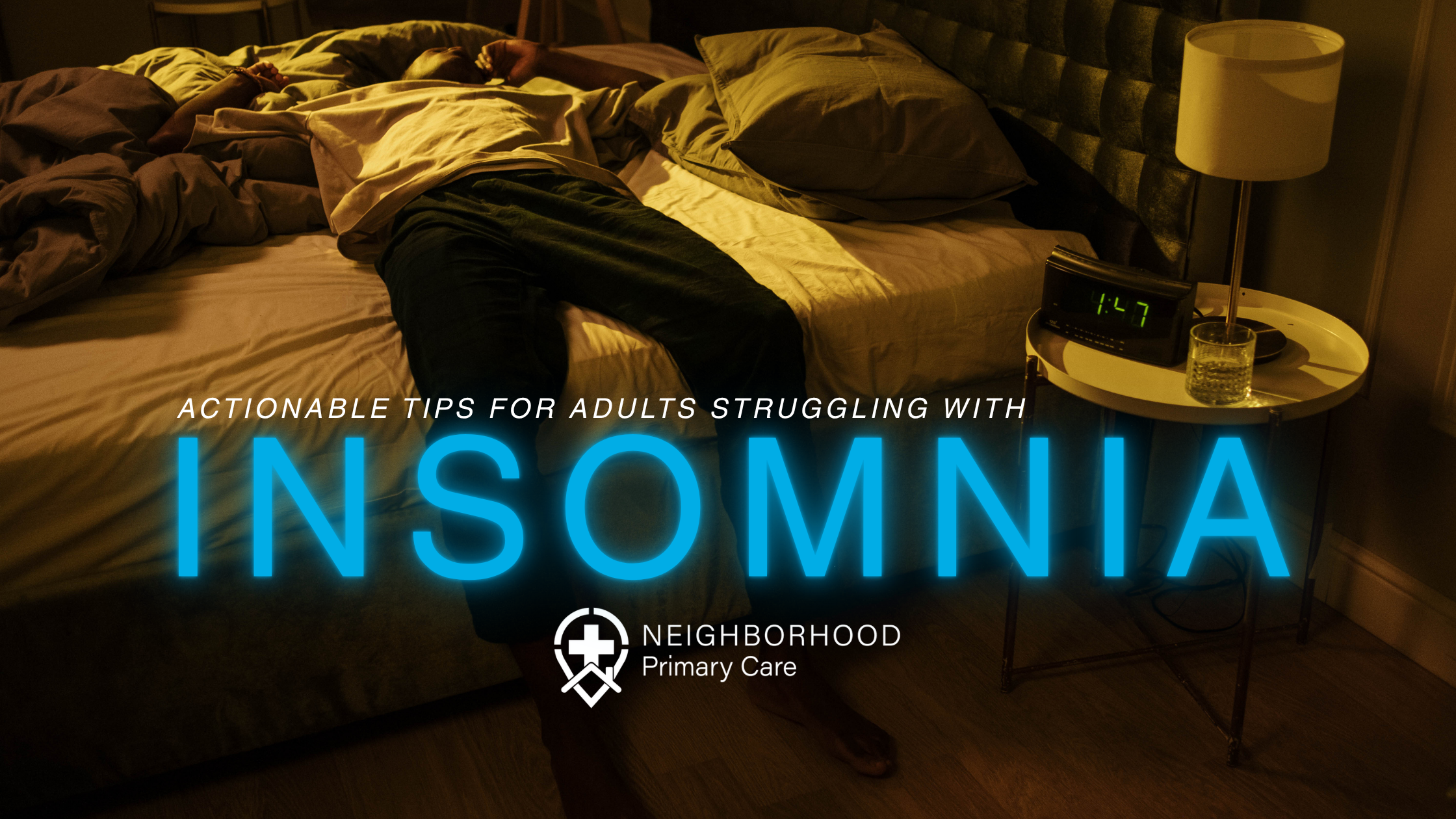
It’s 2:17 a.m. You’ve flipped your pillow three times, checked the clock more times than you can count, and started doing math on how many hours you’ll get if you fall asleep right now. By morning, you’re groggy, short on patience, and reaching for a second cup of coffee before 9 a.m.

If this sounds familiar, you’re far from alone. Millions of adults deal with insomnia or restless nights. The good news is that small, steady changes to your daily habits, often called sleep hygiene, can make a real difference in how quickly you fall asleep and how rested you feel when you wake up.

Here are practical, research-backed tips you can start using tonight.

What Is Sleep Hygiene?

Sleep hygiene is the set of habits and surroundings that support healthy, consistent sleep. It covers your daily routine, your bedroom, what you eat and drink, and how you handle stress. Most adults need at least seven hours of sleep each night, and good sleep hygiene helps make those hours count.

1. Stick to a Consistent Sleep Schedule

Your body runs on an internal clock called your circadian rhythm. When you go to bed and wake up at different times every day, that clock gets thrown off.

  • Wake up at the same time every day, even on weekends. This is the single most powerful anchor for your sleep cycle.
  • Go to bed when you feel sleepy, not just because the clock says so.
  • Keep naps short. If you need one, aim for 20 to 30 minutes before mid-afternoon.

Consistency may feel hard at first, but within a week or two, many people notice they fall asleep more easily.

2. Limit Screen Time Before Bed

Phones, tablets, and TVs give off blue light that can signal your brain to stay alert. Scrolling also keeps your mind busy at the exact moment you want it to slow down.

Try setting a “screens off” time 30 to 60 minutes before bed. If that feels tough, start with 15 minutes and build from there. Use night mode on your devices, and consider charging your phone outside the bedroom so it’s not the last thing you see.

3. Create a Sleep-Friendly Bedroom

Your bedroom should feel like a calm retreat, not a second office.

  • Keep it cool. Most people sleep best when the room is between 60 and 67°F.
  • Keep it dark. Blackout curtains or a sleep mask can block outside light.
  • Keep it quiet. A fan, white noise machine, or earplugs can mask sudden sounds.
  • Save your bed for sleep and intimacy. Working, eating, or watching TV in bed teaches your brain to link it with being awake.

A comfortable mattress and supportive pillows matter too, so if yours are worn out, they may be part of the problem.

4. Watch Your Caffeine and Alcohol Habits

What you drink during the day can follow you into the night.

Caffeine can stay in your system for hours. Try to cut off coffee, tea, soda, and energy drinks by early afternoon, at least six to eight hours before bed.

Alcohol might make you feel drowsy at first, but it disrupts sleep later in the night. It often leads to lighter, more broken sleep and early waking. Limiting alcohol, especially in the evening, can help you sleep more deeply.

Heavy meals close to bedtime can also cause discomfort or heartburn. A light snack is fine if you’re hungry, but aim to finish larger meals two to three hours before sleep.

5. Build a Relaxing Wind-Down Routine

Your body needs a signal that the day is ending. A simple, repeatable routine can help you shift from busy to calm.

Ideas to try:

  • Take a warm shower or bath
  • Read a paper book under soft light
  • Do gentle stretches
  • Listen to calming music or a sleep story
  • Dim the lights around your home

Pick two or three that feel good and do them in the same order each night. Over time, your brain will start to recognize the routine as a cue for sleep.

6. Manage Stress and a Racing Mind

For many adults, the hardest part isn’t getting into bed. It’s turning off the mental to-do list once you’re there.

  • Write it down. Spend five minutes before bed jotting down worries or tomorrow’s tasks so they’re out of your head.
  • Try deep breathing. Slowly breathe in for four counts, hold for four, and breathe out for six.
  • Practice progressive muscle relaxation. Tense and release each muscle group, starting at your toes and moving up.
  • Get out of bed if you can’t sleep. If you’ve been awake for about 20 minutes, move to another room and do something quiet until you feel sleepy. This keeps your bed linked with rest, not frustration.

Regular physical activity and time in natural daylight during the day can also lower stress and improve sleep quality. Just try to finish intense workouts a few hours before bed.

When to Talk to Your Primary Care Provider

Sleep hygiene works well for many people, but it isn’t a cure-all. If you’ve tried these tips and still struggle to fall or stay asleep at least three nights a week, or if poor sleep is affecting your mood, focus, or health, it’s time to get support.

Ongoing sleep problems can be linked to conditions like sleep apnea, anxiety, depression, thyroid issues, chronic pain, or medication side effects. Your primary care provider can help find the cause and talk through options, including cognitive behavioral therapy for insomnia (CBT-I), a proven, drug-free approach.

You deserve to wake up feeling rested. If restless nights are wearing you down, schedule a visit with your primary care provider. Our team is here to listen, help you understand what’s going on, and build a plan that brings better sleep within reach.

Leave a Reply

Your email address will not be published. Required fields are marked *

Are you looking for
IN HOME CARE?

NCC House Calls offers the same great care for home-bound patients.