

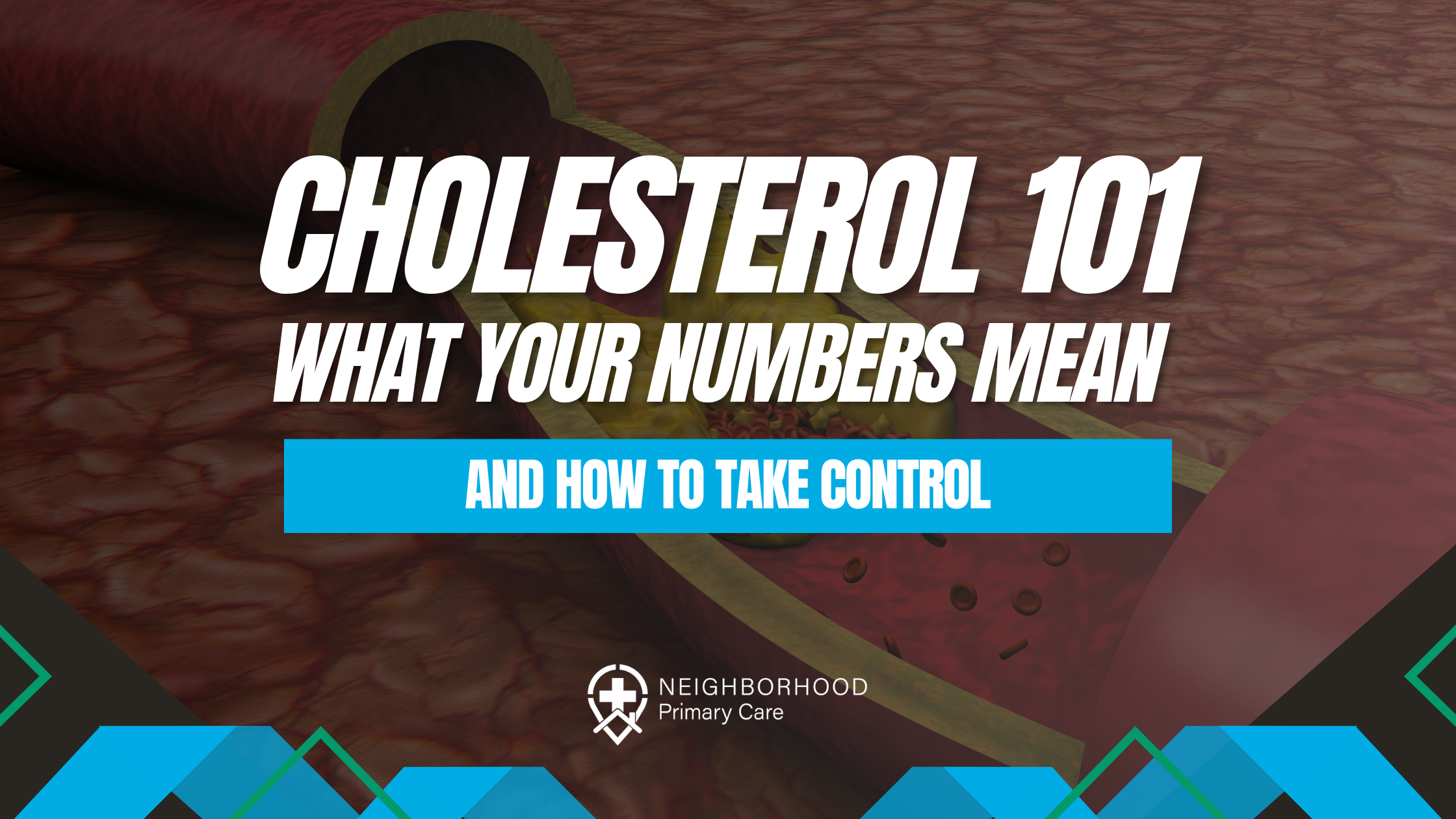
Cholesterol 101: What Your Numbers Mean and How to Take Control
You can’t feel high cholesterol. There’s no ache, no fatigue, no obvious sign that something’s off. Yet behind the scenes, it can quietly narrow your arteries and set the stage for heart disease—often for years before you notice a thing. That’s exactly why understanding your cholesterol numbers is one of the smartest moves you can make for your long-term health.
In this guide, you’ll learn what cholesterol actually is, what those numbers on your lab report really mean, and practical ways to take control through diet, exercise, and, when needed, medication. We’ll also cover when to see a provider and how a simple blood test can give you real answers. Let’s break it down.
What Is Cholesterol, Really?
Cholesterol is a waxy, fat-like substance found in your blood. It gets a bad reputation, but your body actually needs some of it. Cholesterol helps build cells, make hormones, and produce vitamin D.
The problem starts when you have too much of the wrong kind. Cholesterol travels through your blood in two main types of “carriers,” and the balance between them shapes your heart health.
Your liver makes most of the cholesterol your body needs. The rest comes from the foods you eat, especially those high in saturated and trans fats. When levels climb too high, cholesterol can build up along your artery walls, making it harder for blood to flow.
So what? Cholesterol isn’t the enemy—but keeping it balanced is key to protecting your heart. And the only way to know your balance is to check.
Understanding Your Numbers
If you’ve ever glanced at a cholesterol panel and felt lost, you’re not alone. A few key numbers tell the story. Once you know what each one means, your results make a lot more sense.
LDL (“Bad”) Cholesterol
LDL stands for low-density lipoprotein. Think of it as the cholesterol you want to keep low. When LDL is high, it can deposit along your artery walls, forming plaque that narrows the arteries over time. That buildup raises your risk of heart attack and stroke.
HDL (“Good”) Cholesterol
HDL, or high-density lipoprotein, is the type you want higher. It works like a cleanup crew, carrying excess cholesterol away from your arteries and back to your liver, where it’s removed. Higher HDL generally means better protection for your heart.
Triglycerides
Triglycerides are another type of fat in your blood. High levels often go hand in hand with other risk factors, like extra weight, low activity, or too much sugar and refined carbs. Keeping them in a healthy range supports your overall heart health.
Total Cholesterol
This number combines your LDL, HDL, and a portion of your triglycerides into one figure. It gives a broad snapshot, but your provider will look at the full picture—not just this single number—to understand your risk.
So what? Your cholesterol panel is more than one number. It’s the balance between “good” and “bad” that matters most, and your provider can help you read it in the context of your whole health.
What Healthy Cholesterol Looks Like
Everyone’s ideal targets depend on their personal risk factors, but here’s a general guide many adults aim for:
- LDL: lower is better, generally under 100 mg/dL for most adults
- HDL: higher is better, ideally 60 mg/dL or above
- Triglycerides: best kept under 150 mg/dL
- Total cholesterol: typically under 200 mg/dL
If your numbers fall outside these ranges, don’t panic. Cholesterol is highly manageable, and small, steady changes often make a real difference. Your provider will help you set goals that fit your age, history, and risk factors.
So what? Knowing your target numbers turns a confusing lab report into a clear roadmap for action.
How to Manage Cholesterol Through Diet
What you eat has a powerful effect on your cholesterol. The good news? You don’t need a perfect diet—just smarter, more consistent choices.
Foods That Help
- Fiber-rich foods. Oats, beans, lentils, fruits, and vegetables help lower LDL by pulling cholesterol out of your system.
- Healthy fats. Olive oil, avocados, nuts, and seeds support better cholesterol balance.
- Fatty fish. Salmon, mackerel, and sardines provide omega-3s that benefit your heart.
- Whole grains. Brown rice, whole wheat, and quinoa are better choices than refined grains.
Foods to Limit
- Saturated fats, found in fatty cuts of meat, butter, and full-fat dairy
- Trans fats, often hiding in fried foods and some packaged snacks
- Added sugars and refined carbs, which can raise triglycerides
- Excess processed foods, which tend to pack in unhealthy fats and sodium
Small swaps add up fast. Trade chips for a handful of unsalted nuts, or swap butter for olive oil when you cook. Let those choices become habits, and your numbers can follow.
So what? You don’t have to overhaul everything overnight. A few steady changes to your plate can meaningfully improve your cholesterol over time.
How Exercise Improves Your Cholesterol
Moving your body is one of the best natural tools for healthier cholesterol. Regular activity can raise your “good” HDL and help lower LDL and triglycerides.
The best part? Consistency matters more than intensity.
- Aim for regular movement, such as a 30-minute walk most days of the week.
- Find something you enjoy, like swimming, cycling, dancing, or gardening.
- Break it up into shorter sessions if that fits your schedule better.
- Add light strength training a couple of times a week for extra benefit.
A tip for our Summerlin summers: exercise early in the morning or later in the evening to beat the desert heat, and always bring water.
So what? You don’t need a gym membership or intense workouts. Steady, enjoyable movement is enough to move your numbers in the right direction.
When Medication Comes Into the Picture
Sometimes lifestyle changes alone aren’t enough to reach healthy cholesterol levels, and that’s okay. For many people, medication is a helpful and safe part of the plan.
Statins are the most common cholesterol-lowering medications, and they work by reducing how much cholesterol your body makes. Other options exist, too, depending on your situation. Your provider will consider your numbers, your risk factors, and your overall health before recommending anything.
If medication is part of your plan, a few habits help you get the most from it:
- Take it exactly as prescribed, even on days you feel fine.
- Keep up with lifestyle changes, since diet and exercise still matter.
- Attend follow-up visits and labs so your provider can track your progress.
- Never stop or adjust a medication on your own. Always talk with your provider first.
So what? Medication isn’t a failure—it’s a tool. Paired with healthy habits, it can protect your heart and give you peace of mind.
When to See a Provider
Because high cholesterol is silent, you can’t rely on symptoms to tell you something’s wrong. The only reliable way to know your numbers is a simple blood test called a lipid panel.
Consider scheduling a visit if:
- It’s been a while since your last cholesterol check. Many adults should be screened every 4 to 6 years, and more often with risk factors.
- You have a family history of high cholesterol or heart disease.
- You have other risk factors, like high blood pressure, diabetes, extra weight, or a history of smoking.
- You’re managing an ongoing condition and want to stay ahead of complications.
If you’ve been searching for “primary care near me” or a trusted lipid check in the Las Vegas area, a quick visit is easier than you might think.
So what? You don’t have to guess about your heart health. One simple test turns uncertainty into answers—and a clear plan.
Common Mistakes to Avoid
A few simple traps keep people from staying ahead of their cholesterol. Watch out for these:
- Waiting for symptoms. High cholesterol is silent, so feeling fine isn’t proof everything’s okay.
- Skipping routine bloodwork. A quick lipid panel tells you what guessing never can.
- Assuming young means safe. High cholesterol can affect adults at any age.
- Stopping medication on your own. If you’re prescribed treatment, always check with your provider first.
So what? Avoiding these missteps is far easier when you have a care team who knows your story and helps you stay on track.
New in Summerlin and Accepting New Patients
We know the biggest barrier to heart-healthy care usually isn’t willingness—it’s time and hassle. That’s why we built Neighborhood Primary Care around convenience and warmth, right here in Summerlin.
- Now accepting new patients. We’d love to welcome you and become your trusted medical home.
- Same-day appointments. Need a quick check or feeling unwell? We work to get you in fast.
- On-site lab services. Your cholesterol test and bloodwork happen right in our office for faster, more convenient results—no cross-town trips.
- Friendly providers who listen. You’re never just a chart. We take the time to understand you and your goals.
- Most insurances accepted. Quality care that works with your coverage.
As a primary care practice that’s new to Summerlin and serving the greater Las Vegas area, we’re proud to be part of this community and here to help you stay ahead of your health.
So what? Getting your cholesterol checked and building a plan takes one easy call—not a complicated ordeal.
The Bottom Line
Cholesterol may be silent, but you can absolutely take control of it. Know your numbers, understand the balance between “good” HDL and “bad” LDL, and build a few steady habits around diet and exercise. When lifestyle changes need a little extra help, medication can safely fill the gap. And regular checkups keep everything on track.
Here’s your quick recap:
- Cholesterol matters, but balance is the goal—not zero.
- Know your numbers: LDL, HDL, triglycerides, and total cholesterol.
- Eat with your heart in mind, with more fiber and healthy fats.
- Move most days, even if it’s just a brisk walk.
- Consider medication when your provider recommends it.
- Get tested regularly, since high cholesterol has no symptoms.
So ask yourself: when’s the last time you checked your cholesterol? If you’re not sure, that’s a clear sign it’s time.
Ready to take control of your cholesterol? Call Neighborhood Primary Care at 702-659-9090 or visit neighborhoodprimarycarelv.com to schedule your visit today. We’re now accepting new patients in Summerlin—and we’d love to help you stay healthy for years to come.