

Understanding Blood Pressure: What Your Numbers Really Mean
The cuff squeezes tight around your arm. The machine hums, then beeps. Someone reads off two numbers, something like “128 over 84,” and the visit moves on. You nod along, but you’re left wondering what those numbers say about your health and whether you should be concerned.
You’re far from alone. Understanding blood pressure is one of the simplest ways to protect your heart, brain, and kidneys. Yet most people never get a clear, friendly explanation of what their readings mean.
At Neighborhood Primary Care in Summerlin, we believe you deserve to understand your own health. We’re located at 2050 Mariner Dr. #120, Las Vegas, NV 89128, near Buffalo and Lake Mead, and we’re always happy to talk through your numbers with you.
In this guide, you’ll learn:
- What blood pressure measures and what each number means
- Which ranges are healthy and which need attention
- Why high blood pressure often goes unnoticed
- Everyday habits that help, how to check at home, and when to see a provider
What Blood Pressure Actually Measures
Picture water moving through a garden hose. When the water pushes hard, the hose feels tight. When it flows gently, there’s less strain. Your arteries work much the same way.
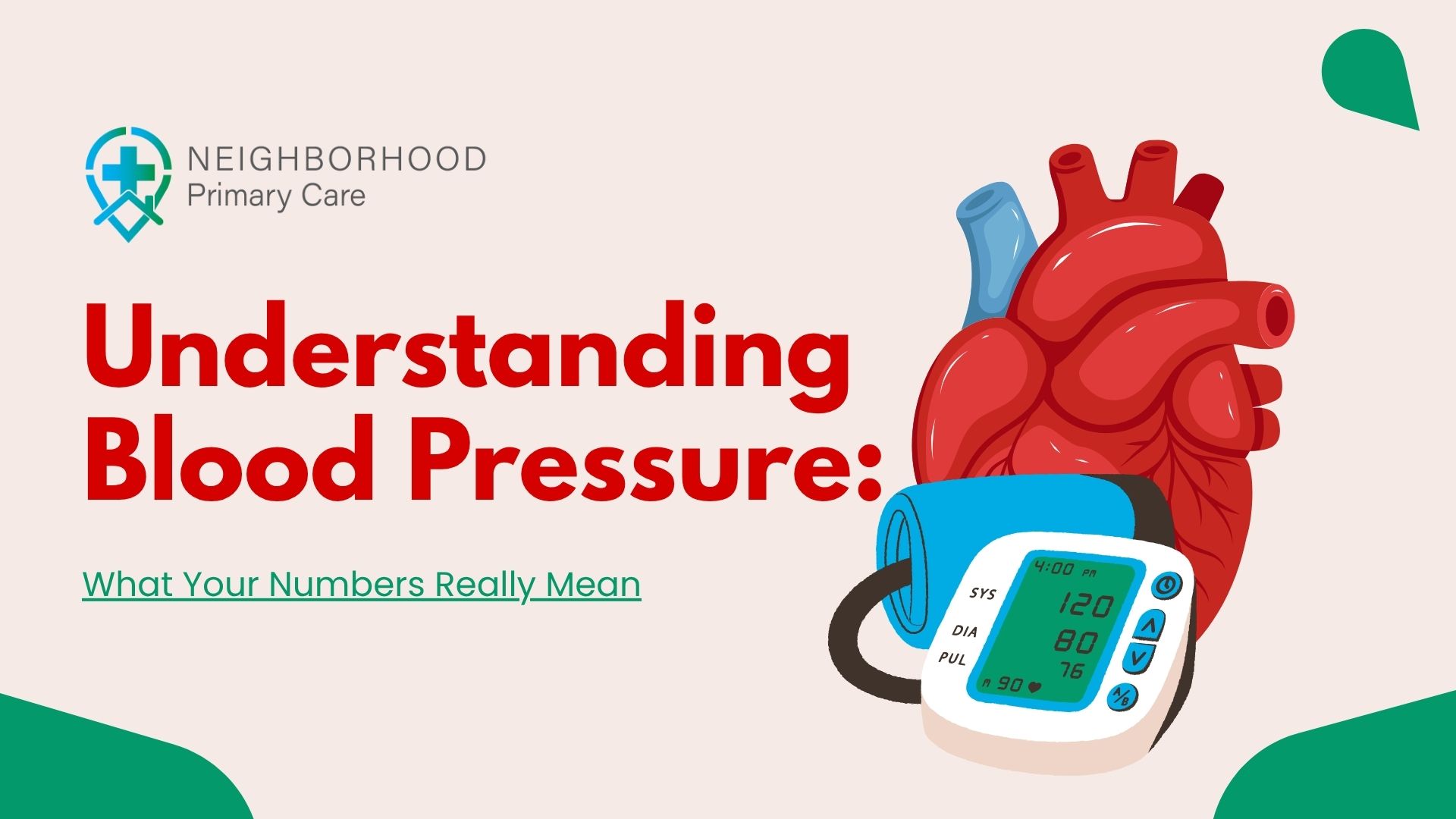
Blood pressure is the force of blood pushing against the walls of your arteries as your heart pumps. Every reading has two numbers, and each one tells part of the story.
The Top Number: Systolic
The top number is called systolic pressure. It measures the force in your arteries when your heart beats and pushes blood out to your body. Think of it as the pressure at the moment of greatest effort.
The Bottom Number: Diastolic
The bottom number is called diastolic pressure. It measures the force in your arteries when your heart rests between beats. This shows how much pressure your blood vessels handle even while your heart takes a break.
Why Both Numbers Matter
Either number running high can be a concern. Some people have a high top number with a normal bottom number, or the other way around. Your provider looks at both to get the full picture of how hard your heart and blood vessels are working.
Blood Pressure Numbers Explained: What’s Healthy and What’s Not
Blood pressure falls into a few standard categories. Here’s a simple breakdown:
Category | Top Number (Systolic) | Bottom Number (Diastolic) |
|---|---|---|
Normal | Less than 120 | and less than 80 |
Elevated | 120–129 | and less than 80 |
High Blood Pressure, Stage 1 | 130–139 | or 80–89 |
High Blood Pressure, Stage 2 | 140 or higher | or 90 or higher |
Severe (needs prompt care) | Higher than 180 | and/or higher than 120 |
Elevated blood pressure is an early nudge. It’s not high blood pressure yet, but it’s a sign to pay attention and build healthy habits now. Stage 1 and Stage 2 mean your blood pressure is high, also called hypertension. That’s the medical term, and it’s very common and very manageable with the right support.
When Numbers Need Urgent Attention
A reading above 180 on top or above 120 on the bottom calls for prompt care. Contact your provider right away and recheck after resting quietly for a few minutes.
If a very high reading comes with chest pain, shortness of breath, back pain, numbness or weakness, vision changes, or trouble speaking, call 911 immediately. Don’t wait to see if it passes.
One Reading Doesn’t Tell the Whole Story
Here’s a common myth: “One high reading means I have high blood pressure.” In reality, a single number can jump because of stress, caffeine, a full bladder, or rushing to your appointment. Some people’s readings even run higher at visits simply because they feel nervous.
That’s why your provider looks at readings over time before drawing any conclusions. Patterns matter much more than one moment.
Why High Blood Pressure Is Called the “Silent” Condition
Most people with high blood pressure feel completely fine. No headache, no dizziness, no warning sign at all. That’s exactly what makes it so easy to miss.
Nearly half of adults in the U.S. have high blood pressure, and many of them don’t know it. Meanwhile, the extra force quietly strains the body year after year. Over time, untreated high blood pressure can damage the heart, blood vessels, kidneys, brain, and eyes, raising the risk of heart attack, stroke, and kidney disease.
Here’s a real-world picture. A busy Summerlin parent stops in for a routine visit. They feel great and only came in because it had been a while. Their reading lands in Stage 1. With a few small changes, like cooking at home more and walking after dinner, plus regular check-ins, their numbers improve over the next several months.
That’s the hopeful part. You can’t feel your blood pressure, but you can check it. And once you know your numbers, you can do something about them.
Common Factors That Raise Blood Pressure
Many things shape your blood pressure. Some you can change, and some you can’t. Knowing the difference helps you focus your energy where it counts.
Factors You Can Influence
- High-sodium diet: Salt makes your body hold onto extra fluid, which raises pressure.
- Low physical activity: Regular movement keeps your heart and blood vessels strong.
- Extra weight: Carrying more weight asks your heart to work harder.
- Alcohol and tobacco: Both can push blood pressure up.
- Poor sleep and ongoing stress: Your body needs downtime to recover and reset.
Factors You Can’t Change
Age, family history, and certain health conditions, like diabetes or kidney disease, can all raise your risk. If high blood pressure runs in your family, that’s not a reason to worry. It’s a reason to check your numbers regularly.
A Note for Desert Living
Las Vegas heat and dry air make dehydration easy, even in the cooler months. Staying hydrated supports your overall heart health. If you take blood pressure medication, ask your provider how heat and fluids may affect you.
Simple Habits That Support Healthy Blood Pressure
You don’t need a dramatic life overhaul. Small, steady changes often make the biggest difference, and they work best alongside regular care with your provider.
Watch the Salt
Much of the sodium we eat hides in packaged foods, restaurant meals, sauces, and deli meats. Reading labels and cooking at home a bit more often can lower your intake without much effort.
Fill Your Plate With Color
Fruits, vegetables, whole grains, beans, and low-fat dairy all support healthy blood pressure. One well-known approach is the DASH eating plan, which stands for Dietary Approaches to Stop Hypertension. It focuses on these whole foods while cutting back on salt and added sugar.
Move Most Days
Walking, biking, swimming, and dancing all count. Fall and winter mornings in Summerlin are perfect for getting outside without the summer heat.
Rest and Recharge
Good sleep and real stress relief give your body a chance to recover. Limiting alcohol and avoiding tobacco help, too.
Start this week with one or two of these:
- Swap one salty snack for fresh fruit or unsalted nuts
- Take a 15-minute walk after dinner
- Keep a water bottle with you during the day
- Cook one extra meal at home
- Set a consistent bedtime
How to Check Your Blood Pressure at Home the Right Way
Home readings give you and your provider a clearer picture than occasional checks at visits. But accuracy depends on how you take them.
Choosing a Home Monitor
An upper-arm cuff that fits properly is usually the most reliable choice. Feel free to bring your monitor to your next visit so we can check its accuracy.
Step-by-Step for an Accurate Reading
- Skip caffeine, exercise, and smoking for 30 minutes beforehand.
- Empty your bladder.
- Sit quietly for 5 minutes with your back supported and feet flat on the floor.
- Rest your arm on a table at heart level, with the cuff on bare skin.
- Stay still and quiet during the reading.
- Take two readings about a minute apart and write both down.
Keep a Simple Log
Record the date, time, and both readings. Bring your log to your next visit. Those patterns help your provider make smart decisions about your care.
Common mistakes to avoid: checking right after rushing around or drinking coffee, using a cuff that’s too small or too large, talking or crossing your legs, and panicking over one unusual number.
When to See Your Provider About Blood Pressure
It’s a good time to book a visit if:
- Your home readings are often above normal
- You have a family history of high blood pressure or heart disease
- You haven’t had your blood pressure checked in over a year
- You have questions about your current medication or plan
At a blood pressure visit, we’ll talk about your health and daily habits, take a careful reading, review any home logs, and build a plan that fits your real life.
Managing blood pressure works best as a partnership. A provider who knows you can track trends over time, adjust your plan as needed, and help you stay ahead of problems instead of reacting to them.
Care That Feels Like Home
We know health numbers can feel confusing or even a little scary. At Neighborhood Primary Care, we take the time to listen and explain things in plain language. You’re never rushed, never judged, and always treated like the neighbor you are.
Whether your numbers look great or need some attention, we’re here to help you understand them and feel confident about your next steps.
Know Your Numbers, Protect Your Health
Blood pressure has two numbers, and both matter. Because high blood pressure rarely causes symptoms, regular checks are the only way to know where you stand. The good news is that everyday habits, accurate home monitoring, and steady care with a provider who knows you can make a real difference for your heart and your long-term health.
Take the first step today and schedule a blood pressure check.
Call us today at 702-659-9090 to book your visit.
- Address: 2050 Mariner Dr. #120, Las Vegas, NV 89128 (near Buffalo & Lake Mead)
- Hours: Monday through Friday, 8 AM to 5 PM (by appointment)
Let Neighborhood Primary Care be your partner in heart health, with caring, convenient support close to home in Summerlin.