

When a Minor Injury Needs an X-Ray
You rolled your ankle stepping off a curb, or your child took a hard fall at practice. Now the joint is swelling, and you’re stuck wondering: is this something rest and ice can fix, or does it need a closer look? It’s one of the most common questions we hear, and it deserves a clear answer.
At Neighborhood Primary Care in Summerlin, we help patients tell the difference every day. Located at 2050 Mariner Dr. #120, Las Vegas, NV 89128, near Buffalo and Lake Mead, we offer on-site X-ray so you can get answers fast, without driving across town. In this guide, you’ll learn what counts as a minor injury, which ones may need imaging, the warning signs to watch for, and how same-visit X-ray saves you time and stress.
What Counts as a “Minor” Injury?
Not every bump or bruise needs medical care. Many small injuries heal on their own with a little rest and patience. The tricky part is knowing where the line falls.
A truly minor injury usually stays mild and steady. Think of a light sprain, a small bruise, or a scrape that stings but doesn’t slow you down much. You can still move the area, put weight on it, and go about your day with a bit of care.
Something more serious tends to announce itself. The pain is sharp or deep, the swelling grows, or you simply can’t use the injured part the way you normally would. What this means: if an injury keeps you from moving or bearing weight, it’s worth getting checked, even if it seems small at first.
Common Injuries That May Need an X-Ray
Some injuries look minor on the surface but hide a bigger problem underneath. Here are the ones that most often send patients our way.
Sprains vs. Fractures
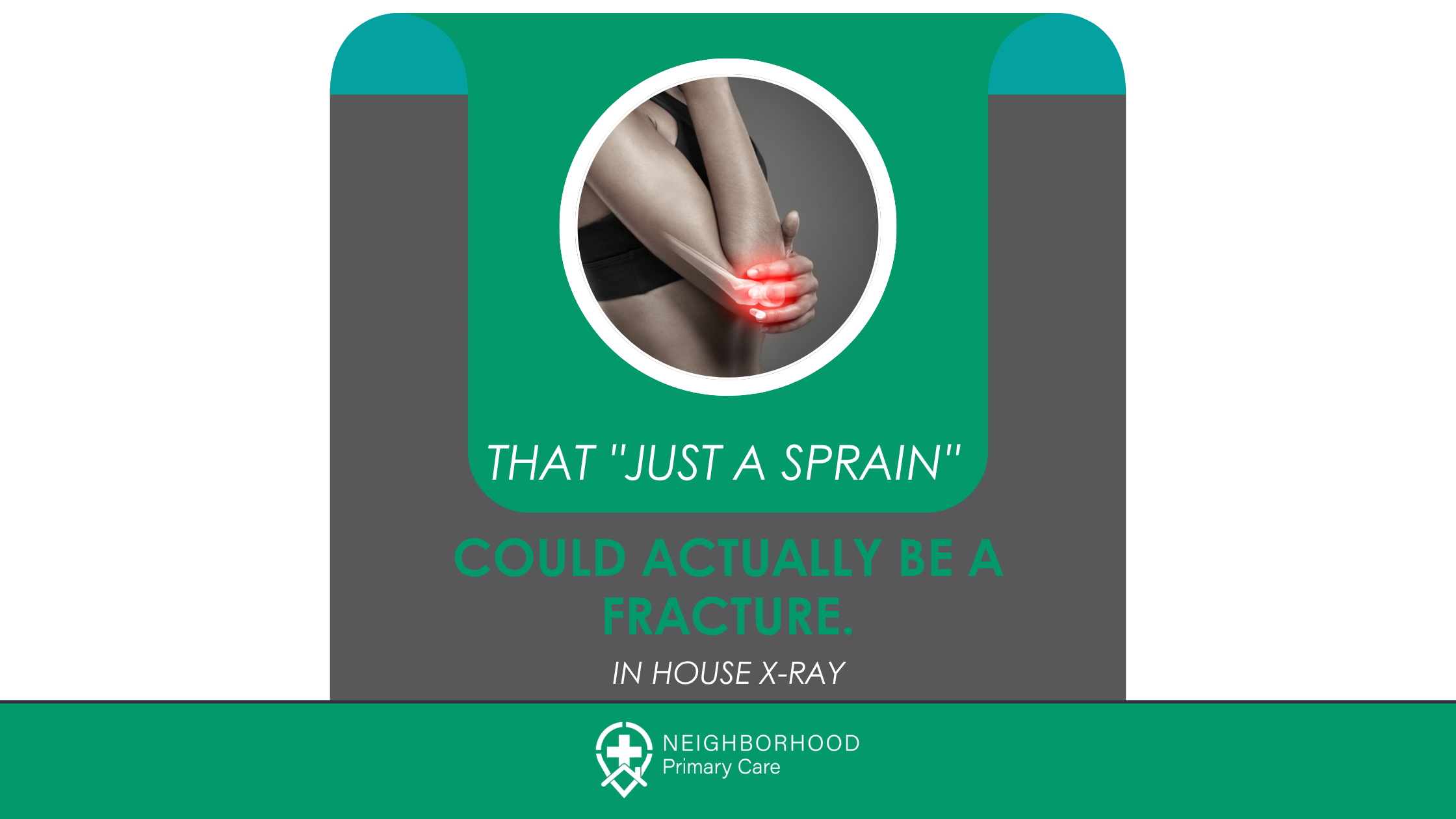
This is the big one, because a sprain and a fracture can feel almost identical at first. Both cause pain, swelling, and trouble moving the area. But they’re very different injuries.
- A sprain is a stretched or torn ligament, the tissue that connects bone to bone. It’s soft-tissue damage.
- A fracture is a crack or break in the bone itself.
You often can’t tell them apart by feel alone. An X-ray shows exactly what’s happening inside, so you get the right treatment instead of guessing. Try this next time: if pain and swelling don’t ease within a day or two, treat it as a possible fracture and get imaged.
Falls
Slips and falls are a leading cause of injuries at every age. A hard landing can hurt your wrist, hip, tailbone, or ankle, and the damage isn’t always obvious right away.
Older adults especially should take falls seriously, since bones can be more fragile. Even a fall that seems harmless can cause a hairline fracture that only shows up on an X-ray.
Sports Injuries
Weekend games and daily workouts keep us active, but they come with risk. Twisted knees, jammed fingers, and rolled ankles are all common on the field and court.
Younger athletes need extra attention. Growing bones have soft spots called growth plates that can be injured in ways adults don’t experience. When in doubt, imaging gives you a clear, confident answer.
Warning Signs It’s Time for an X-Ray
Pain alone doesn’t always mean a break. But certain signs point to something that needs a closer look. Reach out if you notice any of these:
- You can’t put weight on it. Trouble standing or walking on an injured leg or foot is a red flag.
- The pain is severe or getting worse. Mild aches often fade; sharp, growing pain does not.
- There’s noticeable deformity. A bone or joint that looks bent, crooked, or out of place needs care right away.
- Swelling and bruising build fast. Rapid, heavy swelling can signal more than a simple sprain.
- You feel numbness or tingling. This may mean pressure on a nerve.
- You heard a pop or snap. That sound at the moment of injury often points to a fracture or torn tissue.
- You can’t move the area normally. Losing your usual range of motion is worth checking.
- It’s not improving. If things haven’t started to feel better within a couple of days, don’t wait it out.
What this means: you don’t have to be certain something is broken to get it checked. If any of these signs show up, an X-ray takes the guesswork out of it.
Why On-Site X-Ray Saves You Time and Stress
Here’s where having imaging right in the office makes a real difference. When you’re hurting, the last thing you want is a long, complicated path to answers.
At many clinics, an injury means one visit to be examined, a referral to a separate imaging center, another trip across town, and then a wait for results to travel back. That’s hours of your day and days of uncertainty.
At Neighborhood Primary Care, we keep it simple:
- Come in and get examined. We look at your injury, ask what happened, and check how it moves.
- Get your X-ray in the same building. No referral, no second appointment, no driving elsewhere.
- Review your images with your provider. We look at the results together and explain what they show in plain language.
- Leave with a clear plan. Whether it’s rest, a brace, or a next step, you walk out knowing exactly what to do.
One visit, one location, real answers. The payoff: less running around, faster relief, and far less stress while you’re already dealing with an injury.
What to Expect at Your Visit
Worried the process is complicated? It’s easier than you’d think. Our team takes the time to understand what happened and how you’re feeling.
A quick exam comes first. We’ll gently check the injured area, ask about your pain, and see how well you can move. If an X-ray makes sense, we take it right there and review the images with you.
From there, your care plan fits your actual injury. That might mean rest and support for a sprain, or the right next steps for a fracture. You’ll never be left wondering what comes next.
When to Skip the Wait and Seek Emergency Care
Most minor injuries are a great fit for a primary care visit. But a few situations call for the emergency room instead. Head there right away if you notice:
- A bone pushing through the skin
- Heavy bleeding that won’t stop
- A limb that looks badly deformed or twisted
- Numbness, coldness, or a bluish color below the injury
- A head, neck, or spine injury with confusion or loss of consciousness
When it’s a clear emergency, don’t wait. For the many everyday sprains, falls, and sports injuries in between, we’re here and ready to help.
Care That’s Simple and Close to Home
An injury is stressful enough without a runaround for answers. At Neighborhood Primary Care, our team listens, explains everything clearly, and gets you the imaging you need in one place. We treat every patient like a neighbor, because that’s exactly who you are.
Whether it’s a rolled ankle, a fall, or a sports mishap, we’re here to help you heal with confidence and get back to the things you love.
Ready to Get That Injury Checked?
If you’re hurting and unsure whether it’s serious, don’t guess and don’t wait it out. A quick visit with on-site X-ray can tell you exactly what’s going on and set you on the path to healing. Getting checked early protects you from bigger problems down the road, and it brings real peace of mind.
Call us today at 702-659-9090 to book your appointment.
- Address: 2050 Mariner Dr. #120, Las Vegas, NV 89128 (near Buffalo & Lake Mead)
- Hours: Monday through Friday, 8 AM to 5 PM (by appointment)
Let Neighborhood Primary Care be your partner in health. With caring, convenient service and on-site X-ray close to home, getting answers has never been easier.
When was the last time an injury left you guessing? Next time, you’ll know exactly what to do.