

Sinus Infection or Seasonal Allergies? How to Tell the Difference
Your nose is stuffy, your head feels heavy, and you can’t stop sneezing. Is it a sinus infection or seasonal allergies? The symptoms look so much alike that even careful people mix them up. But the difference matters, because each one calls for a different kind of care.
At Neighborhood Primary Care in Summerlin, we help patients sort out what’s really going on and feel better faster. Located at 2050 Mariner Dr. #120, Las Vegas, NV 89128, near Buffalo and Lake Mead, we make it easy to get answers close to home. Let’s break down how these two conditions differ, where they overlap, and when it’s time to reach out.
The Quick Version: What Sets Them Apart
Both conditions cause congestion and misery, but they come from very different places. A sinus infection happens when the spaces behind your cheeks and forehead become inflamed and blocked, often after a cold or from trapped bacteria. Seasonal allergies happen when your immune system overreacts to something in the air, like pollen, dust, or mold.
In other words, one is an infection, and the other is your body’s response to a trigger. That single difference shapes how each one feels, how long it lasts, and how we treat it.
Symptoms: How Each One Feels
The clues are in the details. Paying attention to your specific symptoms can point you in the right direction.
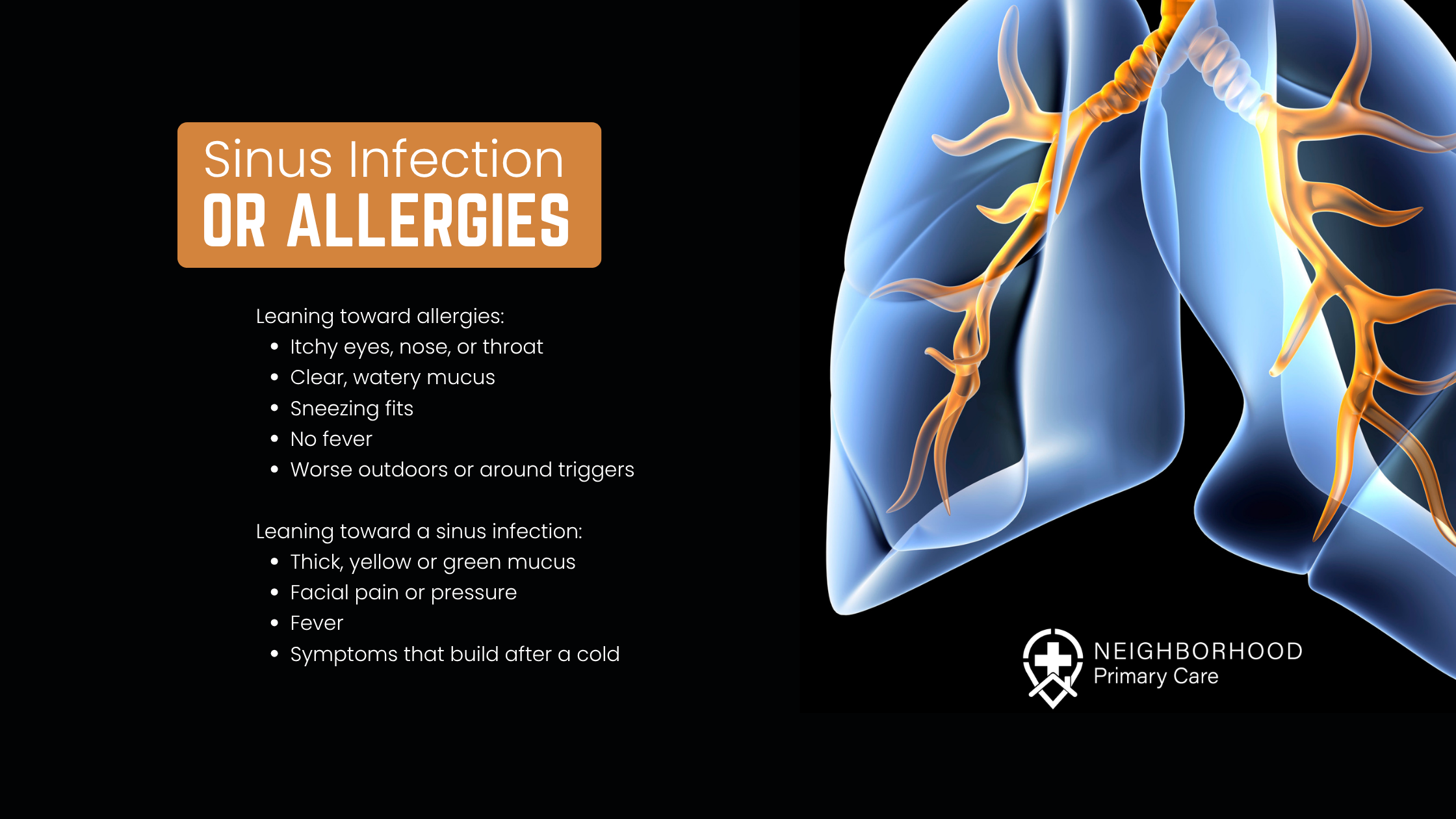
Signs that lean toward a sinus infection
- Thick, discolored mucus. Yellow or green nasal drainage often suggests infection.
- Facial pain or pressure. You may feel it around your cheeks, eyes, or forehead, and it can worsen when you bend over.
- Fever. A raised temperature points to infection, not allergies.
- Tooth or jaw ache. Pressure in your sinuses can spread to your upper teeth.
- Bad breath or a reduced sense of smell. Trapped mucus can cause both.
- Symptoms that build after a cold. Sinus infections often follow a virus that lingers.
Signs that lean toward seasonal allergies
- Itchy eyes, nose, or throat. Itching is one of the biggest giveaways for allergies.
- Clear, watery mucus. Allergy drainage tends to be thin and clear, not thick.
- Frequent sneezing. Repeated sneezing fits are common with allergies.
- Watery, red eyes. Allergies often affect your eyes along with your nose.
- No fever. Allergies don’t raise your temperature.
- Symptoms tied to your surroundings. You may feel worse outdoors, around pets, or on high-pollen days.
Duration: The Timing Tells a Story
How long your symptoms stick around is one of the most helpful clues.
Seasonal allergies can last for weeks or even months, as long as the trigger is in the air. They may flare during spring or fall, then fade when the pollen count drops. Allergy symptoms also tend to come and go with your environment. Step inside on a windy day, and you might feel better within the hour.
A sinus infection follows a different pattern. It often starts after a cold and then gets worse instead of better. Most viral sinus infections improve within about ten days. If your symptoms drag on past that, or seem to improve and then suddenly return, an infection may be to blame.
Triggers: What Sets Each One Off
Knowing what kicks off your symptoms can help you and your provider figure out the cause.
Allergies flare in response to specific triggers in your environment. Common culprits include tree and grass pollen, dust mites, pet dander, and mold. If your symptoms show up like clockwork every spring, or every time you’re near a cat, allergies are the likely reason.
Sinus infections usually start a different way. Many begin as a common cold that never fully clears. The lingering congestion blocks your sinuses, giving bacteria a chance to grow. Allergies themselves can even set the stage, since ongoing inflammation makes a sinus infection more likely to follow.
Where They Overlap and Get Confusing
Here’s the tricky part: these two conditions share a lot of symptoms. Both can leave you congested, stuffy, and drained. Both can cause a runny nose, postnasal drip, a cough, and that foggy, worn-out feeling that makes it hard to focus.
To make things messier, one can lead to the other. Untreated allergies can inflame your nasal passages enough to trigger a sinus infection. So you might start with itchy eyes and sneezing, only to end up with facial pressure and thick mucus a week later.
This overlap is exactly why guessing can steer you wrong. Reaching for allergy medicine won’t clear a bacterial infection, and antibiotics won’t calm an allergic reaction. Getting the right answer means you get the right relief.
When to See a Provider
Mild symptoms often ease on their own, but some signs deserve a closer look. Reach out to us if you notice any of these:
- Symptoms that last longer than ten days without improving
- A fever, especially one that’s high or won’t go away
- Severe facial pain, pressure, or swelling
- Symptoms that get better and then suddenly worsen
- Thick, discolored mucus that sticks around
- Allergy symptoms that disrupt your sleep, work, or daily life
- Repeat sinus infections throughout the year
- Wheezing or trouble breathing
You don’t have to tough it out or play the guessing game. If your symptoms are wearing you down, that alone is a good reason to get checked.
How Primary Care Helps You Feel Better
The good news is that both conditions are very treatable once we know what we’re dealing with. At Neighborhood Primary Care, we start by listening. We’ll ask about your symptoms, how long they’ve lasted, and what seems to set them off.
From there, a simple exam helps us pinpoint the cause. We check your ears, nose, throat, and sinuses, and we take your history into account. If allergies seem likely, we can talk through testing and ways to identify your triggers. If it’s a sinus infection, we’ll determine whether it’s viral or bacterial, since that guides the right treatment.
Your care plan is built around what you actually need. For allergies, that might mean antihistamines, nasal sprays, or steps to limit your exposure to triggers. For a sinus infection, we may recommend rest, fluids, and symptom relief, and antibiotics only when they’re truly warranted. We’ll never hand you medicine you don’t need.
Best of all, you get all of this in one visit, close to home. No running across town, no long waits for answers. Just clear guidance and a plan you can start right away.
Care That’s Simple and Close to Home
Feeling stuffed up and exhausted is no way to spend your week. At Neighborhood Primary Care, our team takes the time to understand your symptoms and explain everything in plain language. We treat every patient like a neighbor, because that’s exactly who you are.
Whether it turns out to be allergies, a sinus infection, or a bit of both, we’re here to help you breathe easier and get back to feeling like yourself.
Ready to Find Relief?
Stop guessing and start feeling better. A quick visit can tell you exactly what’s going on and get you on the path to relief.
Call us today at 702-659-9090 to book your appointment.
- Address: 2050 Mariner Dr. #120, Las Vegas, NV 89128 (near Buffalo & Lake Mead)
- Hours: Monday through Friday, 8 AM to 5 PM (by appointment)
Let Neighborhood Primary Care be your partner in health. With caring, convenient service close to home, getting the right answers has never been easier.