

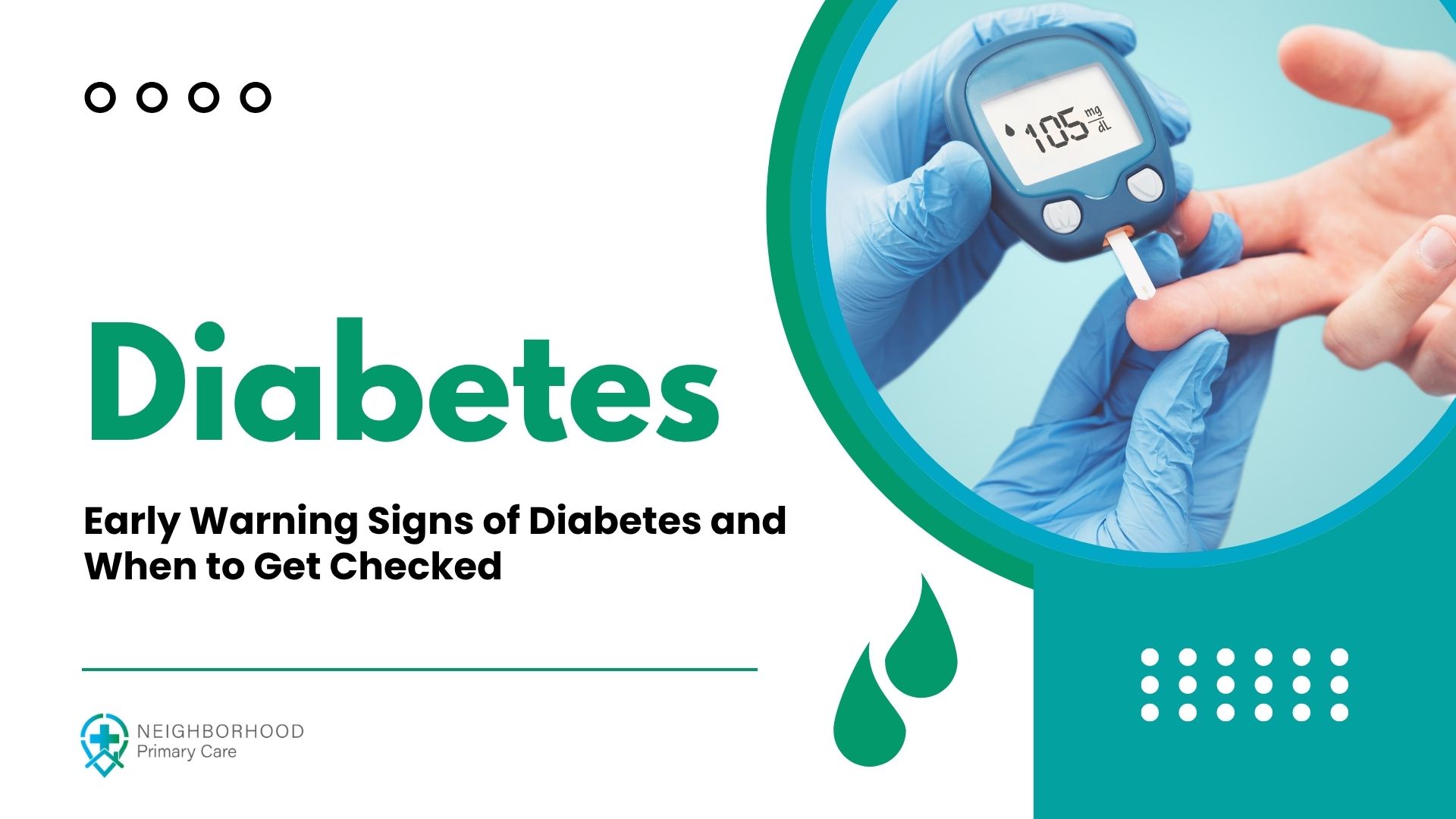
Early Warning Signs of Diabetes and When to Get Checked
Diabetes rarely arrives with a loud announcement. More often, it slips in quietly, one small change at a time. You might feel a little more tired than usual, or find yourself reaching for water more often. It’s easy to brush these things off. But those small signals can be your body’s way of telling you something important.
At Neighborhood Primary Care in Summerlin, we help patients catch diabetes early, when it’s easiest to manage. Located at 2050 Mariner Dr. #120, Las Vegas, NV 89128, near Buffalo and Lake Mead, we make checking your blood sugar simple and stress-free. Let’s walk through the early warning signs, the different types of diabetes, and how a quick test can give you real answers.
How Diabetes Develops Quietly
Here’s what surprises many people: diabetes often builds for years before you notice anything is wrong. Your blood sugar can climb slowly, little by little, while you feel more or less normal.
That slow buildup is exactly why so many cases go undetected. By the time obvious symptoms appear, the condition may have already been affecting your body for a long time. High blood sugar can quietly strain your blood vessels, nerves, kidneys, and eyes, all without a clear warning.
The good news? This silent phase is also your best window for action. Caught early, high blood sugar is far easier to manage, and sometimes even reversible. That’s why paying attention to subtle changes matters so much.
Common Early Warning Signs to Watch For
Your body often drops hints before a diagnosis. These signs can be easy to miss or explain away, but together they tell a story worth listening to. Reach out to your provider if you notice any of these:
- Frequent urination. When blood sugar runs high, your kidneys work overtime to flush out the extra sugar, sending you to the bathroom more often, especially at night.
- Increased thirst. All that extra urination leaves you dehydrated, so you feel thirsty no matter how much you drink.
- Ongoing fatigue. When your body can’t use sugar for energy properly, you feel worn out even after a good night’s sleep.
- Blurry vision. High blood sugar can pull fluid from the lenses of your eyes, making it harder to focus.
- Slow-healing wounds. Cuts, sores, and bruises that linger longer than they should can signal trouble with circulation and healing.
- Tingling in your hands or feet. High blood sugar can irritate your nerves, causing numbness, tingling, or a pins-and-needles feeling.
One or two of these on their own don’t always mean diabetes. But if several show up together, or stick around, it’s time to get checked. There’s no downside to knowing.
Type 1, Type 2, and Prediabetes: What’s the Difference?
“Diabetes” is really an umbrella term. Understanding the main types helps you make sense of what’s happening and what to do next.
Type 1 Diabetes
Type 1 diabetes is an autoimmune condition, meaning the body’s immune system mistakenly attacks the cells that make insulin. Without insulin, sugar can’t move from your blood into your cells for energy. It often appears in childhood or young adulthood, though it can show up at any age. People with Type 1 need insulin to stay healthy, and symptoms tend to come on fairly quickly.
Type 2 Diabetes
Type 2 is the most common form by far. Here, your body still makes insulin, but it either doesn’t make enough or can’t use it well. This type usually develops slowly over years and is closely tied to lifestyle and genetics. The upside is that Type 2 often responds well to changes in diet, movement, and, when needed, medication.
Prediabetes
Prediabetes is a warning stage. Your blood sugar is higher than normal, but not high enough to be called diabetes yet. Think of it as a fork in the road. With the right steps, many people bring their numbers back to a healthy range and avoid Type 2 altogether. Catching it here gives you a powerful head start.
Who’s Most at Risk?
Diabetes can affect anyone, but certain factors raise your chances. Knowing your risk helps you and your provider decide how closely to keep an eye on your blood sugar.
Common risk factors include:
- Family history. Having a parent or sibling with diabetes increases your risk.
- Being overweight. Extra weight, especially around the middle, makes it harder for your body to use insulin.
- A less active lifestyle. Regular movement helps your body manage blood sugar.
- Age. Risk for Type 2 rises as you get older, though it’s showing up in younger people more often.
- High blood pressure or high cholesterol. These often travel alongside diabetes.
- A history of gestational diabetes. Diabetes during pregnancy raises your future risk.
- Certain ethnic backgrounds. Some groups face a higher likelihood of developing Type 2.
If any of these apply to you, don’t panic. Risk factors aren’t a diagnosis. They’re simply a reason to stay informed and check in with your provider.
How Primary Care Catches Diabetes Early
The best part of this whole story is how simple testing really is. You don’t need to guess or worry in the dark. A quick blood test can tell you exactly where you stand.
At Neighborhood Primary Care, we use a few key tests to screen for diabetes and prediabetes:
- Fasting blood sugar. This measures your blood sugar after you haven’t eaten for several hours, giving a clear snapshot of how your body handles sugar.
- Hemoglobin A1c. This one test shows your average blood sugar over the past two to three months, so it tells a bigger story than a single reading.
- Random blood sugar. Sometimes we check your level at any point in the day, especially if symptoms are present.
Your provider will explain your results in plain language, no confusing jargon. If your numbers are healthy, that’s great peace of mind. If they’re creeping up, we’ll build a clear plan together to get you back on track. Either way, you walk out knowing more about your health than when you walked in.
Small Steps Make a Big Difference
Whether you’re managing prediabetes or simply lowering your risk, the everyday choices add up. Moving your body most days, choosing balanced meals, and keeping a healthy weight all help your body use insulin better.
You don’t have to overhaul your life overnight. Small, steady changes often work best, and we’re here to help you find the ones that fit your real life. Progress matters far more than perfection.
Care That Feels Personal and Close to Home
We know that anything involving your health can feel a little scary. That’s why we keep things warm and clear at Neighborhood Primary Care. Our team takes the time to listen, answer your questions, and treat you like the neighbor you are, never a number.
Whether you’ve noticed a few warning signs or just want to stay ahead of your health, we’re glad to help. Getting checked is one of the kindest things you can do for yourself.
Ready to Get Checked?
Don’t wait for symptoms to grow louder. A simple blood test today could catch a problem early and give you real peace of mind.
Call us today at 702-659-9090 to book your appointment.
- Address: 2050 Mariner Dr. #120, Las Vegas, NV 89128 (near Buffalo & Lake Mead)
- Hours: Monday through Friday, 8 AM to 5 PM (by appointment)
Let Neighborhood Primary Care be your partner in health. With caring, convenient service close to home, staying ahead of diabetes has never been easier.