

Why Routine Lab Work Matters More Than You Think
You feel fine, so why bother with lab work? It’s a fair question. But here’s the thing: many health problems build quietly for years before you notice a single symptom. High blood sugar, rising cholesterol, and thyroid trouble often stay hidden until they’ve already done damage. Routine lab work pulls back the curtain, giving your provider a clear look at what’s happening inside your body.
At Neighborhood Primary Care in Summerlin, we use simple blood and urine tests to catch problems early, track your health over time, and keep you feeling your best. Located at 2050 Mariner Dr. #120, Las Vegas, NV 89128, near Buffalo and Lake Mead, we make routine testing easy and convenient. Let’s talk about why these tests matter and what each one actually checks.
Catching Problems Before They Start
Prevention beats treatment every time. Routine lab work is one of the best tools your provider has to spot trouble early, when it’s easier and cheaper to fix.
Think of your labs as a yearly checkup for your body’s inner workings. A quick blood draw can reveal warning signs long before you feel sick. That head start makes a real difference. Many serious conditions, from diabetes to heart disease, respond much better to early action.
Here’s what regular testing can help catch or prevent:
- Diabetes and prediabetes – Rising blood sugar often shows up in labs years before symptoms appear.
- Heart disease – Cholesterol and other markers flag your risk early, so you can make changes that protect your heart.
- Kidney and liver problems – These organs rarely complain until damage is advanced, but labs spot issues sooner.
- Anemia and blood disorders – A simple test can explain fatigue, weakness, or other nagging symptoms.
- Thyroid imbalances – Bloodwork uncovers a slow or overactive thyroid that could be draining your energy.
- Infections and inflammation – Certain markers hint at problems that need a closer look.
The goal is simple: find small issues before they become big ones.
How Labs Support Preventive Care and Chronic Disease Management
Routine lab work does two big jobs. First, it powers preventive care by giving your provider a baseline for your health. When we know your normal numbers, we can spot changes fast. A cholesterol level that ticks up or a blood sugar reading that climbs tells us it’s time to act.
Second, labs are the backbone of managing ongoing conditions. If you already live with diabetes, high blood pressure, or thyroid disease, regular testing keeps your care on track. Your provider uses your results to adjust medications, measure how well treatment is working, and keep you steady over time.
This isn’t a one-and-done visit. It’s an ongoing partnership. Regular labs let us fine-tune your care so you stay healthy for the long haul.
Common Routine Labs and What They Measure
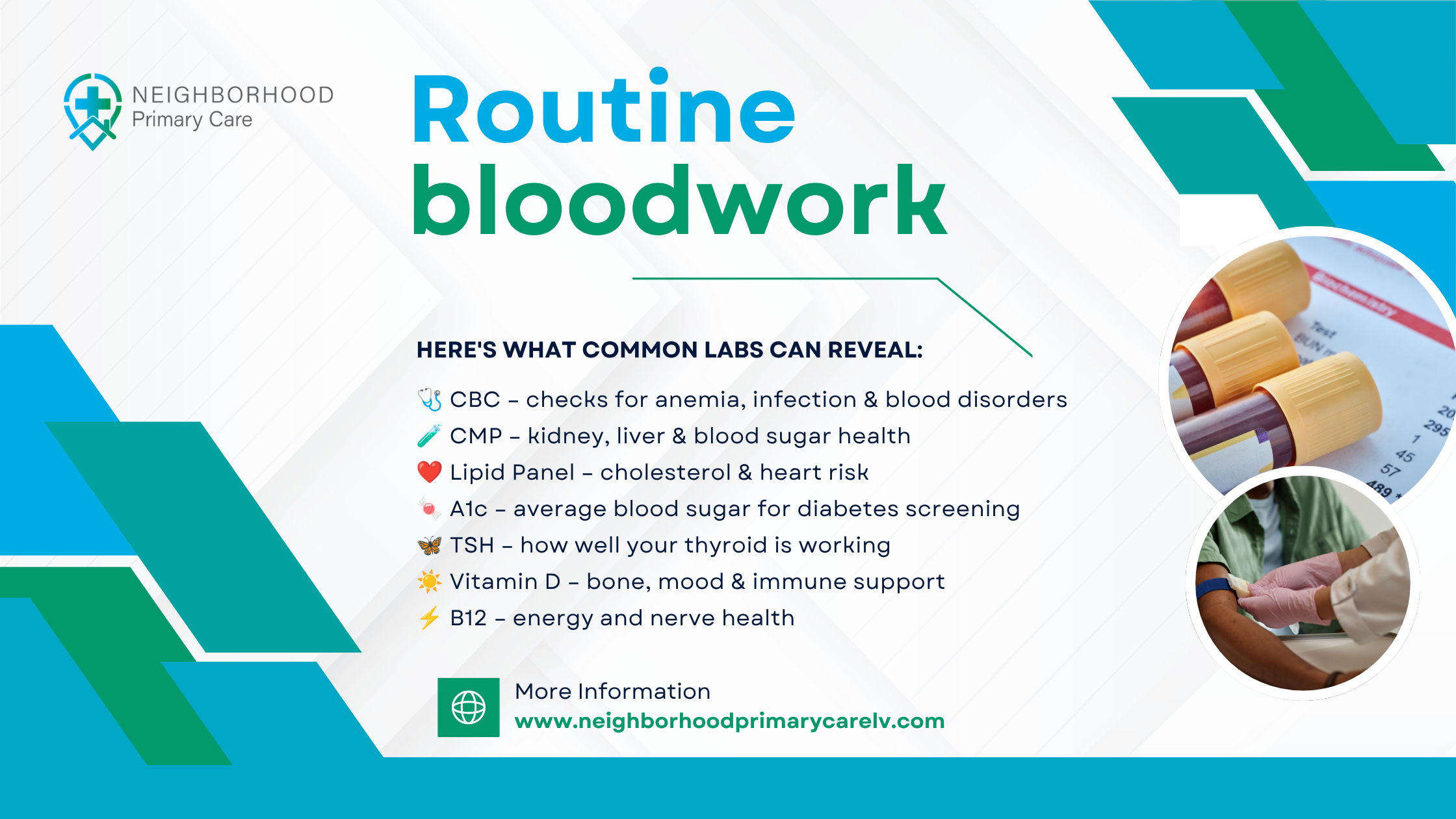
Not sure what all those test names mean? You’re not alone. Here’s a plain-language breakdown of the most common labs drawn at a primary care visit and why each one matters.
Complete Blood Count (CBC)
This test counts the different cells in your blood, including red cells, white cells, and platelets. It helps your provider check for anemia, infections, and blood disorders. If you’ve felt tired, weak, or run-down, a CBC often holds clues.
Comprehensive Metabolic Panel (CMP)
The CMP is a group of tests that gives a broad snapshot of your health. It measures blood sugar, electrolytes, and proteins, and checks how well your kidneys and liver are working. It’s a go-to test for spotting early signs of organ trouble.
Lipid Panel
This test measures your cholesterol and triglycerides, including “good” HDL and “bad” LDL. High levels raise your risk for heart disease and stroke. Your provider uses these numbers to guide diet, lifestyle, and medication choices.
Hemoglobin A1c (HbA1c)
The A1c shows your average blood sugar over the past two to three months. It’s a key test for diagnosing diabetes and prediabetes, and for tracking blood sugar control if you already have diabetes. One quick draw tells a big story.
Fasting Glucose
This measures your blood sugar after you haven’t eaten for several hours. It’s a simple, direct way to screen for diabetes and prediabetes. Paired with your A1c, it gives your provider a clear picture of how your body handles sugar.
Thyroid-Stimulating Hormone (TSH)
TSH checks how well your thyroid is working. A high or low result can point to an underactive or overactive thyroid, which affects your energy, weight, mood, and more. It’s often the first test we run when thyroid trouble is suspected.
Urinalysis
This test examines your urine for signs of infection, kidney problems, diabetes, and dehydration. It’s quick, painless, and packed with useful information about your urinary tract and overall health.
Vitamin D
Many people run low on vitamin D without knowing it. This test checks your levels, since a shortage can affect your bones, mood, and immune system. It’s an easy fix once we catch it.
Vitamin B12
Low B12 can leave you tired, foggy, or tingly in your hands and feet. This test helps your provider find and treat a deficiency that’s easy to overlook.
Your provider will always walk you through your results in plain terms. No confusing jargon, just clear answers and a plan you can follow.
Care That’s Convenient and Close to Home
The best part? You don’t have to run all over town for testing. At Neighborhood Primary Care, we keep things simple. Our team takes the time to listen, order the right labs for your needs, and explain what your numbers mean.
We treat every patient like a neighbor, because that’s exactly who you are. Whether you’re due for a routine check or managing an ongoing condition, we’re here to help you stay ahead of your health.
Ready to Book Your Lab Work?
Don’t wait for symptoms to tell you something’s wrong. A simple round of routine labs could be the first step toward catching a problem early and feeling your best.
Call us today at 702-659-9090 to book an appointment.
- Address: 2050 Mariner Dr. #120, Las Vegas, NV 89128 (near Buffalo & Lake Mead)
- Hours: Monday through Friday, 8 AM to 5 PM (by appointment)
Let Neighborhood Primary Care be your partner in health. With expert care close to home, staying on top of your wellness has never been easier.