


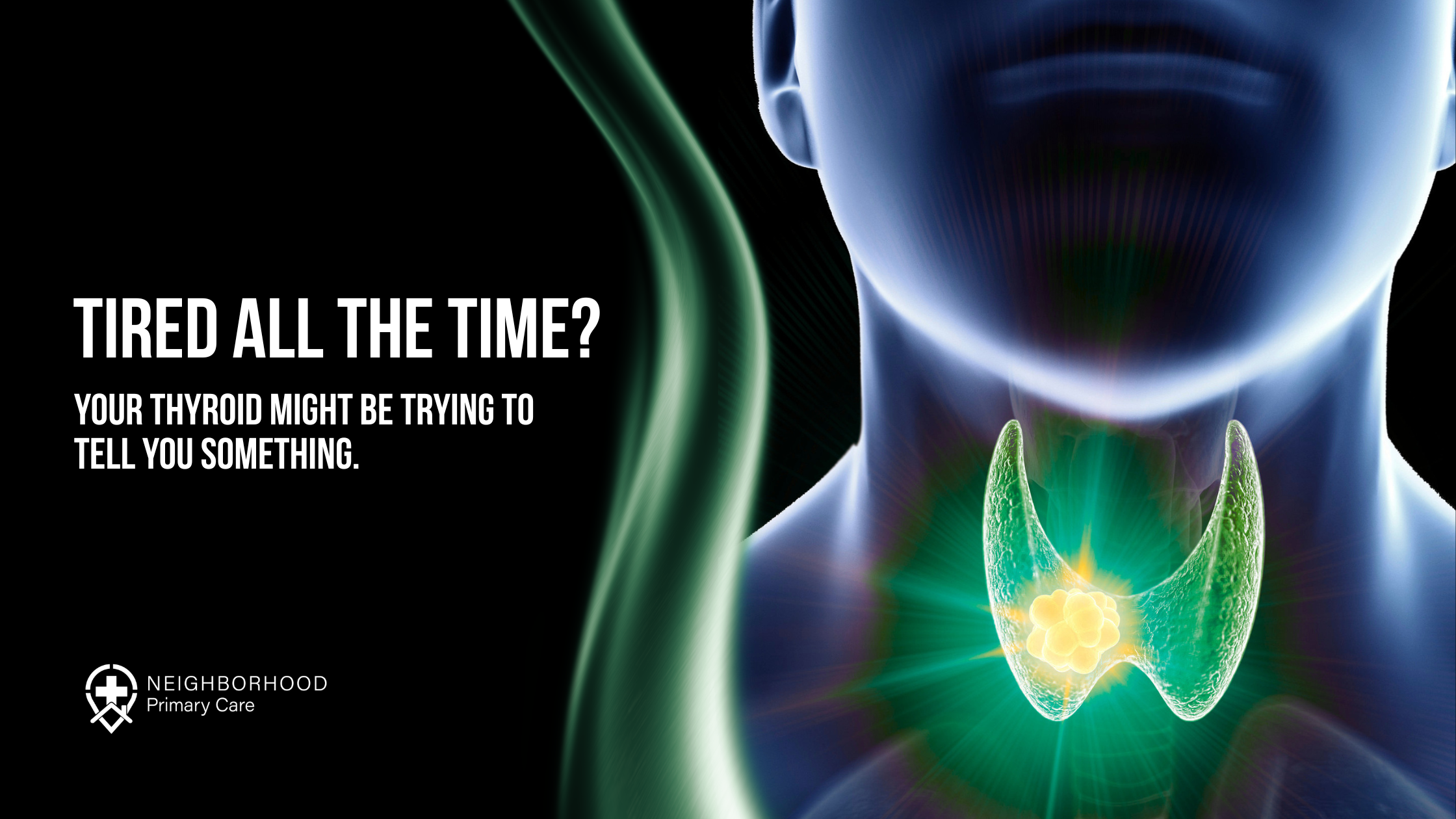
Understanding Thyroid Disorders: What Every Patient Should Know
Feeling tired all the time? Struggling with unexplained weight changes, mood swings, or a racing heart? Your thyroid might be the reason. This small gland has a big job, and when it’s out of balance, you feel it from head to toe.
At Neighborhood Primary Care in Summerlin, we help patients spot, understand, and manage thyroid conditions every day. Located at 2050 Mariner Dr. #120, Las Vegas, NV 89128, near Buffalo and Lake Mead, we make it simple to get answers close to home. Let’s break down what the thyroid does, what can go wrong, and how we can help you feel like yourself again.
What Is the Thyroid and Why Does It Matter?
Your thyroid is a small, butterfly-shaped gland in the front of your neck. It may be tiny, but it acts like a control center for your body’s energy. The thyroid makes hormones that manage your metabolism, which is how your body turns food into fuel.
These hormones touch nearly every system you have. They affect your heart rate, body temperature, digestion, weight, mood, and even how well you sleep. When your thyroid produces the right amount of hormone, everything hums along smoothly. When it makes too much or too little, your whole body can feel off.
That’s why thyroid problems can be tricky. The symptoms often overlap with everyday stress or aging, so they’re easy to brush off. But with the right testing, we can find the root cause and get you back on track.
Common Thyroid Disorders
Thyroid conditions come in a few main forms. Some slow your body down, others speed it up. Here are the ones we see most often.
Hypothyroidism (Underactive Thyroid)
This happens when your thyroid doesn’t make enough hormone. Your body slows down, and you may feel sluggish, cold, or foggy. Hypothyroidism is one of the most common thyroid problems, especially in women and adults over 60.
Hyperthyroidism (Overactive Thyroid)
The opposite of hypothyroidism, this occurs when your thyroid makes too much hormone. Your body speeds up, which can leave you feeling jittery, anxious, or worn out. You might notice a fast heartbeat or trouble sleeping.
Hashimoto’s Thyroiditis
Hashimoto’s is an autoimmune condition and the leading cause of hypothyroidism. Your immune system mistakenly attacks the thyroid, slowly reducing how much hormone it can make. Symptoms often build up gradually over time.
Graves’ Disease
Graves’ is another autoimmune condition, but it causes hyperthyroidism instead. Here, the immune system pushes the thyroid to overproduce hormone. Some people with Graves’ also notice bulging eyes or swelling in the neck.
Thyroid Nodules
Nodules are lumps that form within the thyroid. Most are harmless and cause no symptoms at all. Still, they’re worth checking, since a small number can affect hormone levels or need closer evaluation. Your provider can help decide if a nodule needs testing or monitoring.
Symptoms to Watch For
Because thyroid hormones affect so much, the warning signs can vary widely. Pay attention if you notice a cluster of these changes.
Signs of an underactive thyroid (hypothyroidism):
- Constant fatigue or low energy
- Weight gain that’s hard to explain
- Feeling cold when others feel fine
- Dry skin and thinning hair
- Constipation
- Depression or brain fog
- Puffy face or swelling
Signs of an overactive thyroid (hyperthyroidism):
- Unexplained weight loss
- Rapid or irregular heartbeat
- Anxiety, irritability, or nervousness
- Trouble sleeping
- Sweating and sensitivity to heat
- Shaky hands or tremors
- More frequent bowel movements
Everyone is different, and you won’t always have every symptom. If something feels off and won’t go away, it’s worth getting checked. Catching a thyroid issue early makes it much easier to manage.
How Primary Care Providers Diagnose Thyroid Conditions
The good news? Thyroid problems are usually simple to diagnose. It often starts with a conversation and a quick physical exam. Your provider will ask about your symptoms, review your health history, and gently feel your neck for any swelling or lumps.
From there, bloodwork does most of the detective work. Common lab tests include:
- TSH (thyroid-stimulating hormone): The main screening test. It tells us how hard your body is pushing the thyroid to work.
- T4 and T3: These measure the actual thyroid hormones in your blood.
- Thyroid antibody tests: These help confirm autoimmune conditions like Hashimoto’s or Graves’ disease.
A few small vials of blood can reveal exactly what’s happening. Sometimes your provider may recommend imaging, like an ultrasound, to take a closer look at nodules or swelling.
If your results point to something that needs specialized care, we’ll refer you to the right expert, such as an endocrinologist. We share your records and test results directly, so your care keeps moving without repeat visits or lost paperwork.
How Primary Care Providers Manage Thyroid Conditions
Once we know what’s going on, treatment is often straightforward. Many thyroid conditions are managed well right in primary care.
For an underactive thyroid, a daily hormone replacement medication usually restores your levels and eases symptoms. For an overactive thyroid, treatment may include medication to slow hormone production, with a specialist involved for certain cases.
Whatever the plan, your provider stays close. We schedule follow-up bloodwork to check your levels, adjust your medication as needed, and make sure you’re feeling better. Thyroid care isn’t a one-and-done fix. It’s an ongoing partnership, and we’re with you the whole way.
How Neighborhood Primary Care Can Help
Living in Summerlin means quality thyroid care is right around the corner. At Neighborhood Primary Care, we take the time to listen to your symptoms and dig for real answers, not quick guesses.
Here’s what you can expect from us:
- Thorough evaluations that connect your symptoms to the bigger picture
- On-site lab services for fast, convenient thyroid bloodwork
- Personalized treatment plans built around your needs and goals
- Ongoing monitoring to keep your levels steady over time
- Smooth specialist referrals when you need extra expertise
We treat every patient like a neighbor, because that’s exactly who you are. Our goal is simple: help you understand your health and feel your best.
Ready to Get Answers?
If you’ve been dealing with unexplained fatigue, weight changes, mood shifts, or other nagging symptoms, don’t wait to find out why. A simple thyroid check could be the first step toward feeling like yourself again.
Call us today at 702-659-9090 to book an appointment.
- Address: 2050 Mariner Dr. #120, Las Vegas, NV 89128 (near Buffalo & Lake Mead)
- Hours: Monday through Friday, 8 AM to 5 PM (by appointment)
Let Neighborhood Primary Care be your partner in health. With expert care close to home, taking charge of your thyroid has never been easier.