

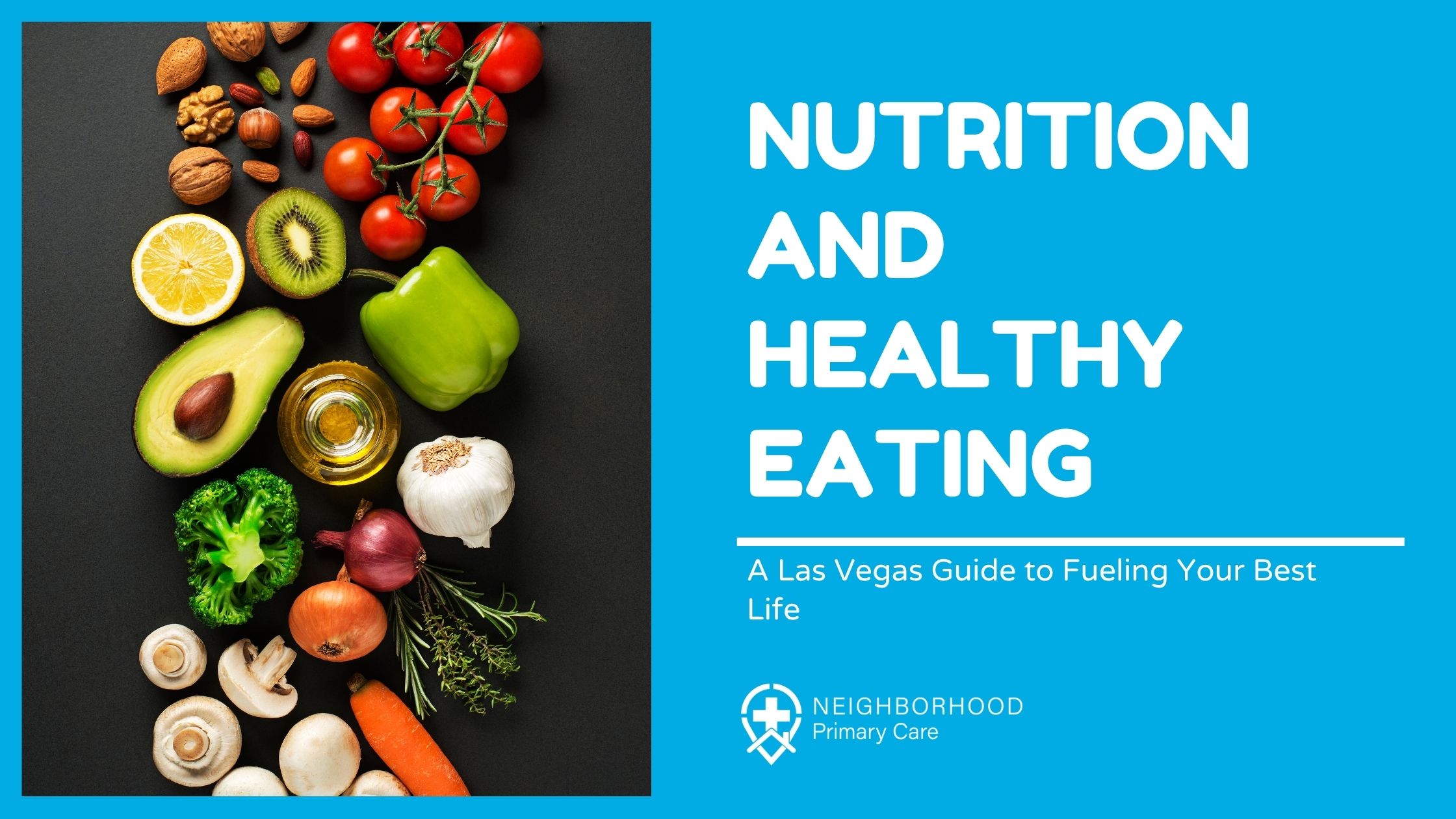
Nutrition and Healthy Eating for Adults: A Las Vegas Guide to Fueling Your Best Life
What you put on your plate shapes how you feel, how you age, and how well your body holds up over the years. Yet with packed schedules, drive-thru convenience, and the endless swirl of diet advice online, eating well can feel harder than it should. Here’s the reassuring truth: good nutrition isn’t about perfection or extreme rules. It’s about steady, doable choices that add up.
This post is for anyone in Las Vegas who wants to eat better, feel more energized, and protect their long-term health. You’ll learn how a balanced diet affects your whole body, the powerful link between what you eat and chronic conditions like diabetes and heart disease, practical eating tips for busy days, the basics of simple meal planning, and when it makes sense to talk with a primary care provider about nutrition. Let’s dig in.
Why a Balanced Diet Matters for Your Whole Body
Food is fuel, but it’s also so much more. The nutrients you take in help build and repair your cells, power your brain, support your immune system, and keep every organ running smoothly. When your diet is balanced, your body has what it needs to thrive.
A balanced diet simply means eating a variety of foods that give your body the right mix of nutrients: carbohydrates for energy, protein for repair and strength, healthy fats for your brain and heart, plus the vitamins, minerals, and fiber that keep everything working well.
When you eat well, the benefits show up in real, noticeable ways:
- Steadier energy throughout the day, without the crash
- Better mood and focus, since your brain runs on what you eat
- Stronger immunity to help you fend off illness
- Healthier weight that’s easier to maintain over time
- Lower risk for many chronic conditions down the road
The takeaway? Balanced eating isn’t a short-term diet. It’s a daily foundation for feeling good today and staying healthy for years to come.
The Powerful Link Between Diet and Chronic Conditions
Here’s where nutrition really shows its strength. What you eat plays a major role in some of the most common chronic conditions, and small changes can make a big difference. Understanding these connections helps explain why your plate matters so much.
Diet and type 2 diabetes
Your body turns much of what you eat into blood sugar. When you take in a lot of refined carbs, sugary drinks, and processed snacks, your blood sugar can spike again and again. Over time, that pattern makes it harder for your body to manage blood sugar and raises your risk for type 2 diabetes.
The good news? A balanced diet with plenty of fiber, lean protein, and whole foods helps keep your blood sugar steady. For many people, smart eating is one of the most effective tools for preventing diabetes or managing it well.
Diet and heart disease
Your heart feels every meal, too. Diets heavy in saturated fat, trans fat, and added sugar can raise your cholesterol and set the stage for heart disease over time. On the flip side, eating more vegetables, whole grains, healthy fats, and lean proteins supports healthy cholesterol and protects your arteries.
Diet and high blood pressure
Salt is a major driver of high blood pressure, and it hides in far more foods than most people realize, especially processed and packaged options. Cutting back on sodium while eating more potassium-rich foods like fruits and vegetables can help bring your numbers into a healthier range.
So what? High blood sugar, high cholesterol, and high blood pressure often travel together, and diet influences all three at once. That means every healthy choice on your plate protects your body on multiple fronts.
Practical Eating Tips for Busy Las Vegas Adults
Let’s be honest: knowing what to eat is one thing, actually doing it on a hectic day is another. Between work, family, and everything else, healthy eating has to be realistic to stick. These practical tips make it easier.
Build a better plate
A simple visual keeps balanced eating easy to remember:
- Fill half your plate with vegetables and fruits for fiber, vitamins, and lasting fullness.
- Add lean protein like chicken, fish, eggs, beans, or tofu to keep you satisfied.
- Choose whole grains such as brown rice, oats, or whole wheat over refined options.
- Include healthy fats in moderation, like avocado, nuts, and olive oil.
Make small swaps that add up
You don’t have to overhaul everything overnight. A few steady swaps go a long way:
- Trade sugary drinks for water, sparkling water, or unsweetened tea.
- Reach for fruit or a handful of nuts instead of processed sweets.
- Pick whole-grain bread and pasta over white versions.
- Cook with olive oil in place of butter when you can.
Plan for the drive-thru days
Some days, eating out is just reality. You can still make solid choices:
- Look for grilled instead of fried options.
- Add a side salad or veggies in place of fries.
- Watch portion sizes, and skip the upsize.
- Choose water or an unsweetened drink over soda.
Stay hydrated in the desert
In our dry Las Vegas climate, it’s easy to mistake thirst for hunger. Sip water throughout the day, and you may find those afternoon cravings settle down on their own.
Quick win: if you change just one thing this week, swap sugary drinks for water. It’s a simple move that lowers added sugar and supports nearly every part of your health.
Meal Planning Basics That Actually Work
Meal planning has a reputation for being complicated, but it doesn’t have to be. At its core, it’s just deciding ahead of time what you’ll eat so you’re not scrambling when hunger hits. A little planning saves time, money, and stress, and it makes healthy choices the easy default.
Start small and simple
You don’t need to plan every meal for the week. Begin with a few:
- Pick three or four dinners to map out for the week ahead.
- Plan grab-and-go breakfasts like overnight oats or yogurt with fruit.
- Prep a couple of lunches you can pack instead of buying out.
Shop with a plan
- Make a list based on your planned meals, and stick to it.
- Shop the perimeter of the store first, where fresh foods usually live.
- Read labels to spot hidden sugar and sodium in packaged items.
- Keep healthy staples on hand, like frozen vegetables, canned beans, and whole grains.
Prep ahead when you can
A little prep on a quieter day pays off all week. Wash and chop vegetables, cook a batch of grains, or portion out snacks. When healthy food is ready to grab, you’re far more likely to reach for it.
Keep it flexible
Life happens, and your plan should bend without breaking. If a busy night calls for a quick meal, that’s fine. The goal is progress and consistency, not a perfect record.
The takeaway? Meal planning isn’t about rigid rules. It’s about setting yourself up so the healthy choice is also the easy one.
Don’t Overlook the Whole Picture
Nutrition doesn’t work alone. A few other habits work hand in hand with healthy eating to help you feel your best.
- Move your body. Regular activity supports healthy weight, blood sugar, and mood. In our summer heat, aim for a morning or evening walk, and bring water.
- Protect your sleep. Poor rest can throw off hunger hormones and fuel cravings, so consistent sleep supports better eating.
- Manage stress. Stress often drives us toward comfort foods. Simple habits like deep breathing or a short walk can help.
Small, steady choices across all of these areas add up to real, lasting results.
When to Talk With a Primary Care Provider About Nutrition
You don’t have to figure out nutrition on your own, and you don’t need a special reason to ask for help. A primary care provider is a great partner for eating well, especially when your health goals or conditions are involved. Consider reaching out if you:
- Want personalized guidance that fits your body, lifestyle, and preferences
- Are managing a chronic condition like diabetes, high blood pressure, or high cholesterol
- Are trying to reach or maintain a healthy weight and want real support
- Feel confused by conflicting diet advice and want trustworthy answers
- Have digestive issues, low energy, or symptoms that may be tied to your diet
- Take medications that interact with certain foods
How your provider can help
A thoughtful checkup connects the dots between what you eat and how you feel. Your provider can review your health history, understand your goals, and build a nutrition plan that actually fits your life, no cookie-cutter advice.
With on-site lab services, checking key markers like blood sugar, cholesterol, and other levels is quick and convenient, with no cross-town trips for bloodwork and faster answers. Those numbers help your provider tailor your plan and track your progress over time. And because you see the same team, they get to know your baseline and can adjust your care as your needs change.
So what? Guessing at nutrition rarely works. A provider who knows your full health picture turns good intentions into a clear, doable plan.
Common Mistakes to Avoid
A few simple traps can trip up even the best intentions. Watch out for these:
- Chasing extreme diets. Crash plans rarely last. Steady, balanced habits win over time.
- Skipping meals. Going too long without eating often leads to overeating later.
- Overlooking hidden sugar and salt. Packaged foods can pack in far more than you’d expect, so read labels.
- Focusing only on the scale. Energy, mood, and how you feel matter just as much as a number.
- Going it alone. Support from a provider makes healthy change far easier and more effective.
Avoiding these missteps is much simpler when you have a care team who knows your story.
New in Las Vegas and Accepting New Patients
We know that eating well in a busy world takes a little support, and we’re here to make it simple. That’s why we built Neighborhood Primary Care around convenience, clarity, and warmth, right here in Las Vegas.
- Now accepting new patients. We’d love to welcome you and become your trusted medical home.
- Same-day appointments. Have a question about your health or want to get started? We work to get you in quickly.
- On-site lab services. Blood sugar, cholesterol, and other bloodwork happen right in our office for faster, more convenient answers.
- Friendly providers who listen. You’re never just a chart. We take the time to understand you, your goals, and your lifestyle.
- Most insurances accepted. Quality care that works with your coverage.
For anyone looking for dependable primary care Las Vegas residents can count on, we’re proud to be part of this community and here to help you build habits that last.
The Bottom Line
Good nutrition is one of the most powerful tools you have for protecting your health, and it doesn’t require perfection. By eating a balanced variety of foods, understanding how your diet affects conditions like diabetes, heart disease, and high blood pressure, using practical tips for busy days, and planning ahead in simple ways, you can feel more energized and lower your long-term risk. And when you want personalized guidance, a primary care provider is ready to help.
Here’s your quick recap:
- Build balanced plates with vegetables, lean protein, whole grains, and healthy fats.
- Know the diet connection to diabetes, heart disease, and blood pressure.
- Make small swaps that fit your busy Las Vegas life.
- Plan simple meals so the healthy choice is the easy one.
- Talk with a provider for personalized guidance and lab work that tracks your progress.
So ask yourself: how well has your plate been fueling you lately? If you’re not sure, that’s a clear sign it’s worth a conversation.
Ready to eat well and feel your best? Call Neighborhood Primary Care at 702-659-9090 or visit neighborhoodprimarycarelv.com to schedule your visit today. We’re now accepting new patients in Las Vegas—with same-day appointments, on-site lab services, and most insurances accepted—and we’d love to help you build a healthier life for years to come.